

Để tạo ra một tia nước đài phun mượt mà tựa như thủy tinh, chỉ riêng áp lực nước là chưa đủ. Hình dáng của tia nước còn phụ thuộc vào các điều kiện dòng chảy bên trong vòi phun, sự ổn định của dòng nước khi thoát ra khỏi miệng vòi, cũng như những tác động gây nhiễu mà nó gặp phải trong không khí.
Số Reynolds (Re) là một điểm khởi đầu hữu ích để tìm hiểu các điều kiện này. Tuy nhiên, bản thân nó không thể dự đoán được chất lượng hình ảnh của một tia nước chảy tầng. Thiết kế vòi phun, sự nhiễu loạn ở thượng nguồn, sức căng bề mặt và các điều kiện vận hành cũng cần được xem xét.
Bài viết này giải thích cách tính số Reynolds, lý do cần thận trọng khi áp dụng các giới hạn truyền thống của dòng chảy trong đường ống, cũng như những yếu tố mà kỹ sư cần xem xét khi thiết kế vòi phun tầng và vòi phun nước nhảy cho đài phun nước.
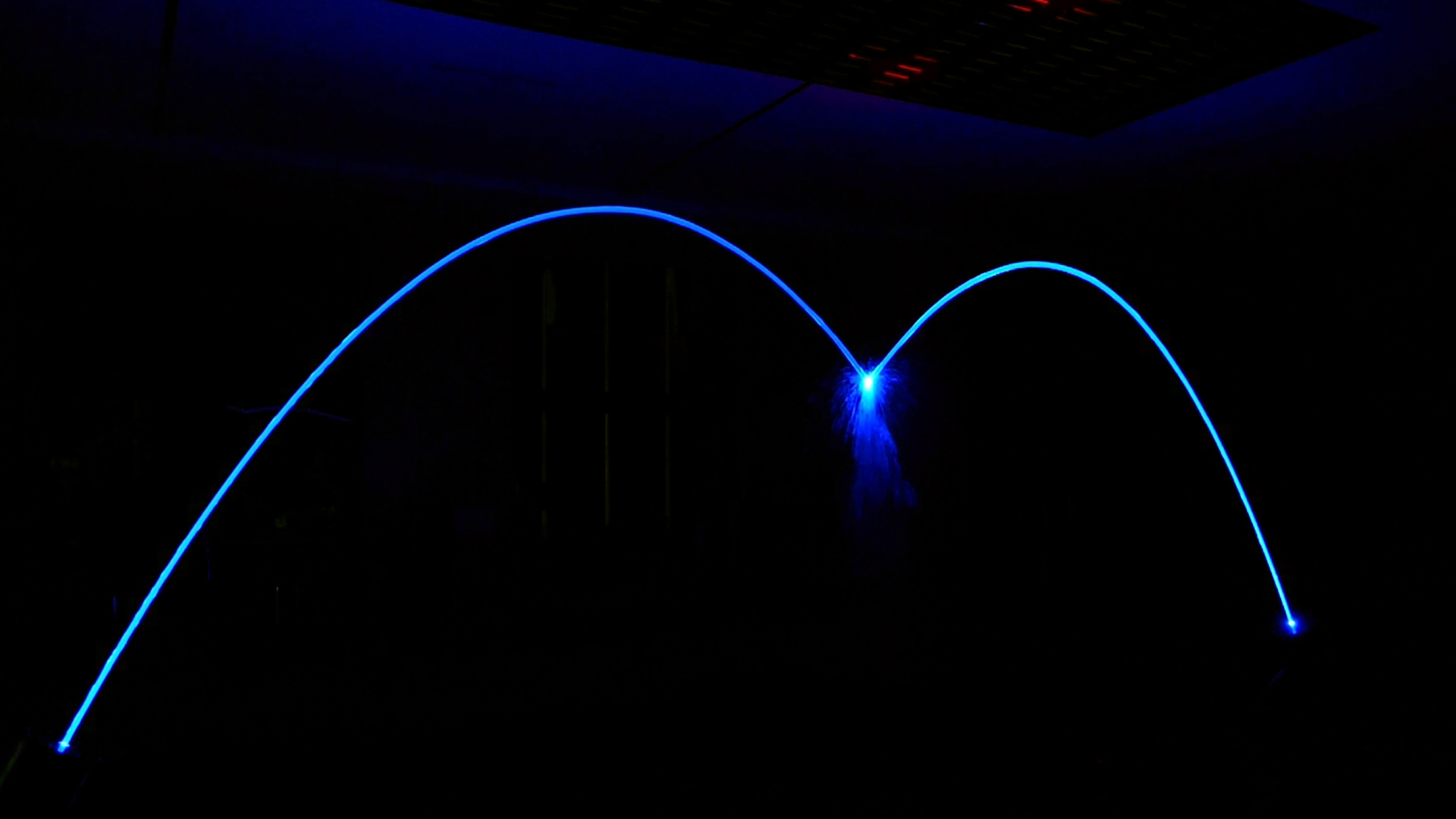
Số Reynolds trong thủy lực đài phun nước là gì?
Số Reynolds là một đại lượng không thứ nguyên mô tả mối quan hệ giữa các hiệu ứng quán tính và hiệu ứng nhớt trong một chất lưu đang chuyển động.
Nói một cách đơn giản, nó giúp các kỹ sư hiểu được cách thức một dòng chảy vận hành dưới một tổ hợp nhất định gồm vận tốc, kích thước đặc trưng và độ nhớt của chất lưu.
Đối với dòng nước chảy qua một đường ống tròn, số Reynolds thường được sử dụng để phân biệt giữa dòng chảy tầng, dòng chảy chuyển tiếp và dòng chảy rối.
| Số Reynolds | Phân loại dòng chảy trong đường ống theo cách truyền thống |
|---|---|
| Dưới khoảng 2.000–2.300 | Dòng chảy tầng |
| Khoảng 2.300–4.000 | Chuyển tiếp |
| Trên khoảng 4.000 | Hỗn loạn |
Các phạm vi này là những hướng dẫn mang tính ước lệ đối với dòng chảy bên trong đường ống. Sự chuyển đổi chính xác còn phụ thuộc vào các nhiễu loạn tại đầu vào, hình học đường ống và các điều kiện vận hành.
Chúng không nên được sử dụng làm các giới hạn chấp nhận chung cho diện mạo của tia nước đài phun sau khi rời khỏi vòi phun.
Vòi phun đài nước không chỉ đơn thuần là dòng chảy trong ống đã ổn định. Nước đi qua các đường dẫn bên trong, thay đổi hướng hoặc tiết diện, rồi cuối cùng trở thành một tia nước tự do được bao quanh bởi không khí.
Bề mặt nước thu được chịu ảnh hưởng bởi các điều kiện mà một số Reynolds duy nhất không thể mô tả đầy đủ.
Cách tính số Reynolds cho một tia nước đài phun
Phương trình thường được sử dụng là:
Re = VD / ν
Một dạng tương đương sử dụng độ nhớt động lực học là:
Re = ρVD / μ
Ở đâu:
Re = Số Reynolds (không thứ nguyên)
V = vận tốc nước trung bình (m/s)
D = đường kính đặc trưng (m)
ν = độ nhớt động học của nước (m²/s)
ρ = mật độ nước (kg/m³)
μ = độ nhớt động lực học của nước (Pa·s)
Đối với một tia nước có dạng gần như hình tròn, đường kính đầu ra danh nghĩa có thể được sử dụng làm đường kính đặc trưng cho việc tính toán sơ bộ.
Ở 20°C, độ nhớt động học của nước xấp xỉ:
ν = 1.004 × 10⁻⁶ m²/s
Khi sử dụng phương trình này, tất cả các đại lượng phải có đơn vị nhất quán.
Một điểm khác biệt quan trọng là Đường kính kết nối tại đầu vào của vòi phun không nhất thiết phải bằng đường kính tại đầu ra của tia phun.Việc sử dụng kết nối đầu vào DN40 cho một vòi phun có đầu ra 14 mm sẽ dẫn đến ước tính không chính xác về số Reynolds tại đầu ra.
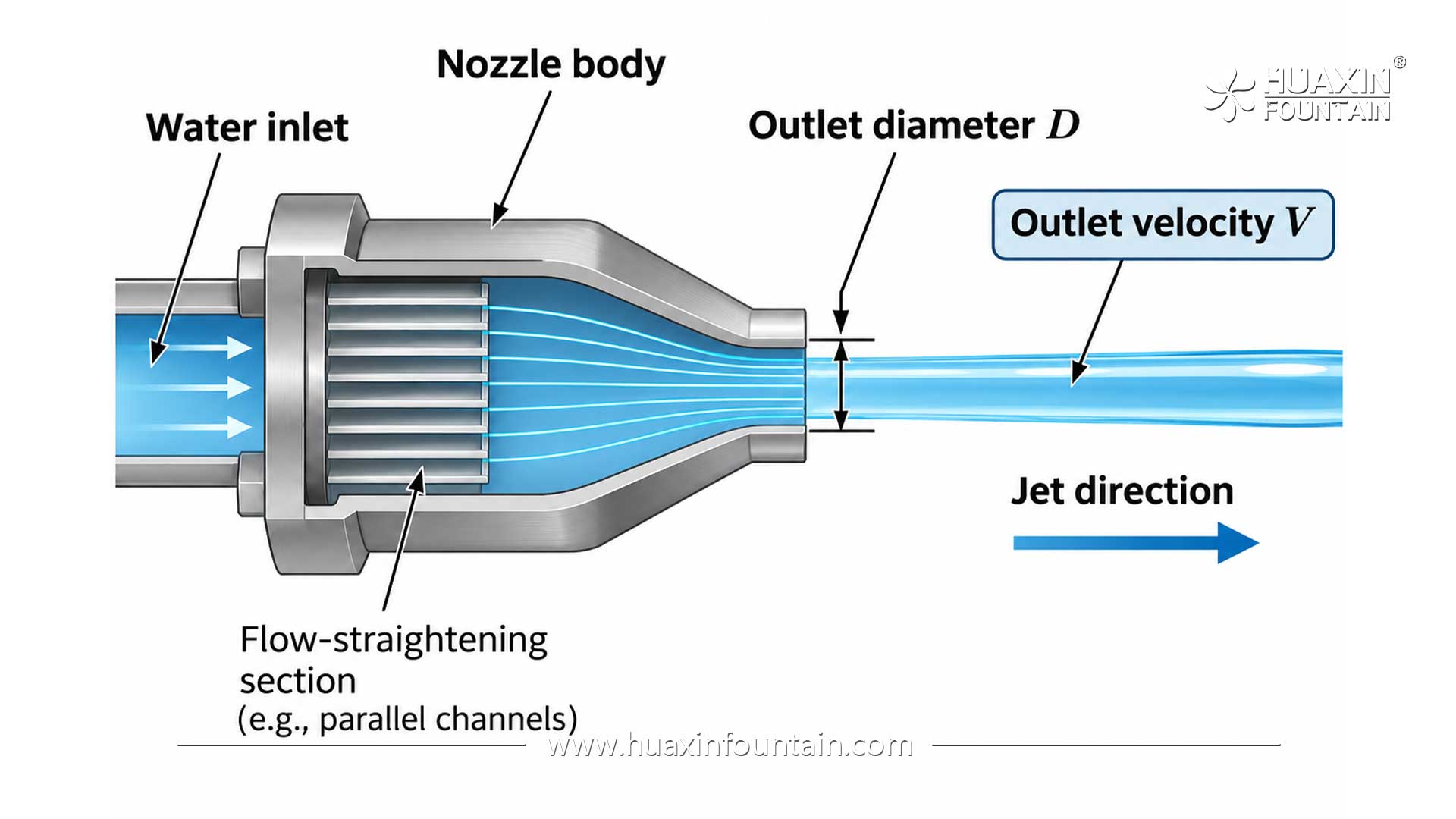
Một phép tính thực tế: Vòi phun nước dạng tia 14 mm
Hãy xem xét một vòi phun minh họa hoạt động trong các điều kiện sau đây:
| Tham số | Giá trị |
|---|---|
| Nhiệt độ nước | 20°C |
| Đường kính đầu ra tia phun | 14 mm (0.014 m) |
| Vận tốc trung bình tại đầu ra | 5.0 m/s |
| Độ nhớt động học | 1.004 × 10⁻⁶ m²/s |
Thay các giá trị vào:
Re = (5.0 × 0.014) / (1.004 × 10⁻⁶)
Re ≈ 69,700
Đối với một cửa xả hình tròn đơn lẻ được lấp đầy, lưu lượng lý thuyết tương ứng là:
Q = (πD² / 4) × V
Q ≈ 2.77 m³/h
Ví dụ này sử dụng các điều kiện vận hành giả định nhằm mục đích minh họa. Đây không phải là kết quả đo lường hiệu suất thực tế của một vòi phun Huaxin cụ thể.
Số Reynolds được tính toán nằm ở mức cao hơn nhiều so với phạm vi dòng chảy tầng trong ống thông thường.
Điều này có nghĩa là nước phải lập tức chuyển thành dạng phun sương phải không?
Không hẳn vậy.
Giá trị được tính toán cho thấy cường độ tương đối của các hiệu ứng quán tính và hiệu ứng nhớt. Bản thân giá trị này không cho biết bề mặt của tia chất lưu sẽ trông nhẵn mịn đến mức nào, hay dòng chất lưu sẽ đi được bao xa trước khi tan rã.
Phân bố vận tốc ban đầu, các nhiễu loạn bên trong, hình học vòi phun và các điều kiện không khí xung quanh cũng ảnh hưởng đến kết quả.
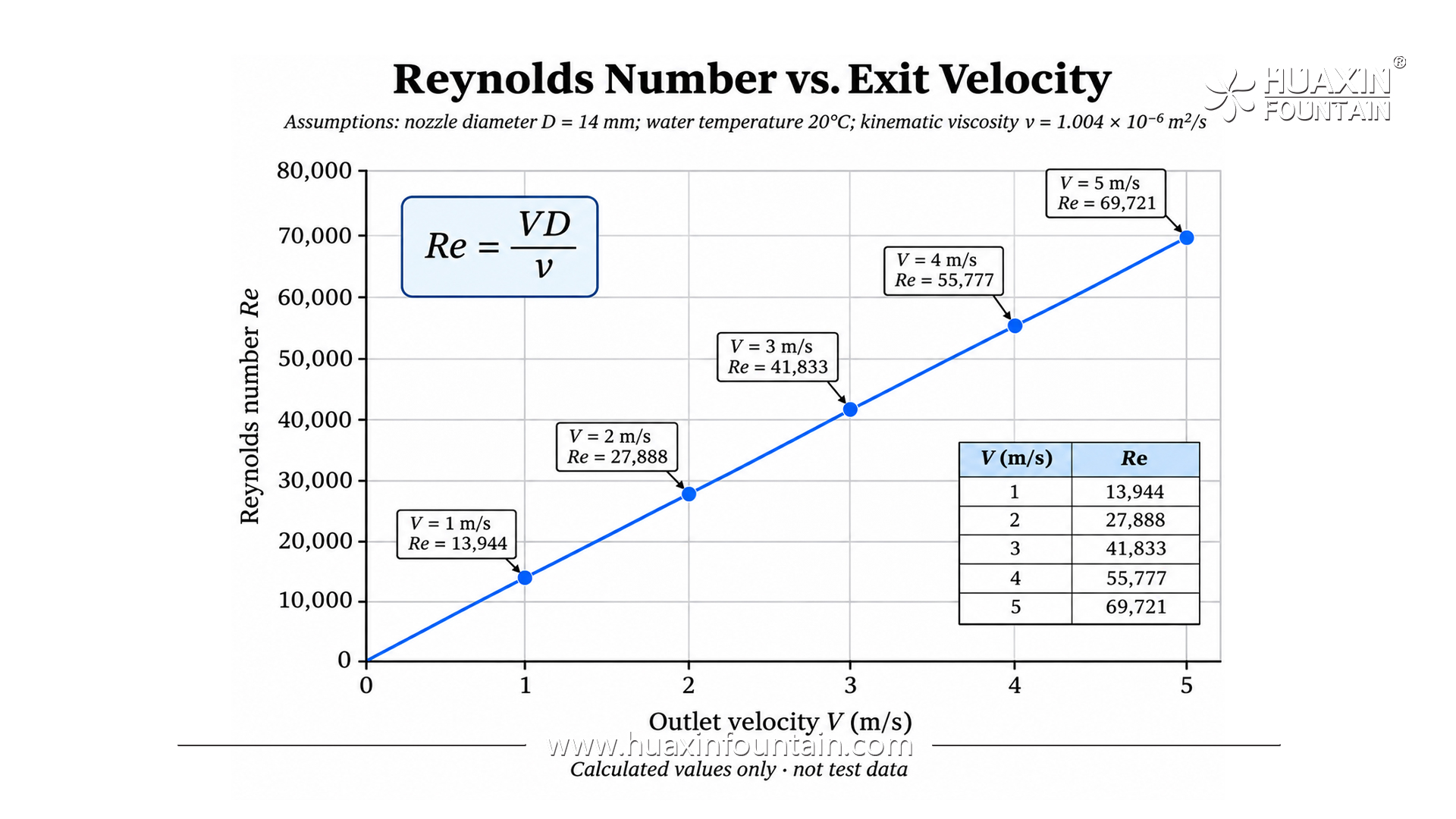
Tại sao số Reynolds thấp là chưa đủ để đảm bảo một tia chất lỏng có vẻ ngoài tựa như thủy tinh
Một số tài liệu tham khảo truyền thống về thiết kế đài phun nước cho rằng số Reynolds dưới 500 là điều kiện thuận lợi để tạo ra cột nước trong suốt với dòng chảy có dạng tầng.
Số Reynolds thấp thực sự có thể liên quan đến dòng chảy có trật tự trong một số điều kiện nhất định. Tuy nhiên, Không nên xem số Reynolds (Re) dưới 500 là yêu cầu chung áp dụng cho tất cả các thiết bị đài phun nước tạo dòng chảy tầng thương mại..
Hãy xem xét ví dụ trước đó với đầu ra 14 mm.
Để duy trì số Reynolds ở mức 500 ở 20°C, vận tốc thoát trung bình sẽ phải xấp xỉ 0.036 m/s.
Tốc độ thấp như vậy sẽ tạo ra rất ít động lượng để hình thành một tia nước đáng kể.
Các thiết kế đài phun nước thực tế cần có vận tốc đầu ra đủ lớn để đạt được độ cao và điểm rơi theo yêu cầu.
Điều này tạo ra một sự phân biệt quan trọng giữa hai ý tưởng:
Phân loại dòng chảy thủy lực
Một mô tả khoa học về chuyển động của chất lưu, dựa trên các điều kiện xác định và các thông số dòng chảy có thể đo lường được.
Tính nhất quán của luồng thị giác
Sự liên tục có thể quan sát được cùng độ nhẵn bề mặt của một cột nước khi nó di chuyển trong không khí.
Một dòng chảy có tính nhất quán có thể tồn tại trên một khoảng cách hữu hạn, ngay cả khi số Reynolds của nó vượt quá phạm vi thường được coi là đặc trưng cho dòng chảy tầng trong ống.
Điều này không có nghĩa là dòng chảy nhất thiết phải là dòng tầng theo cách hiểu khoa học nghiêm ngặt. Cũng không có nghĩa là có thể bỏ qua sự rối.
Điều này có nghĩa là số Reynolds cần được diễn giải dựa trên các điều kiện vật lý của vòi phun và tia phun thực tế.
Các nghiên cứu về tia nước đã chỉ ra rằng các điều kiện dòng chảy ở phía thượng nguồn và hình dạng của vòi phun có thể ảnh hưởng mạnh mẽ đến những biến động trên bề mặt cũng như khoảng cách mà tại đó tia nước vẫn giữ được trạng thái nguyên vẹn.
Đối với kỹ thuật đài phun nước, Kết quả cần đạt được không đơn thuần chỉ là một con số Reynolds thấp khi tính toán. Điều quan trọng là phải có một dòng tia nước đủ êm và ổn định trong các điều kiện vận hành dự kiến.
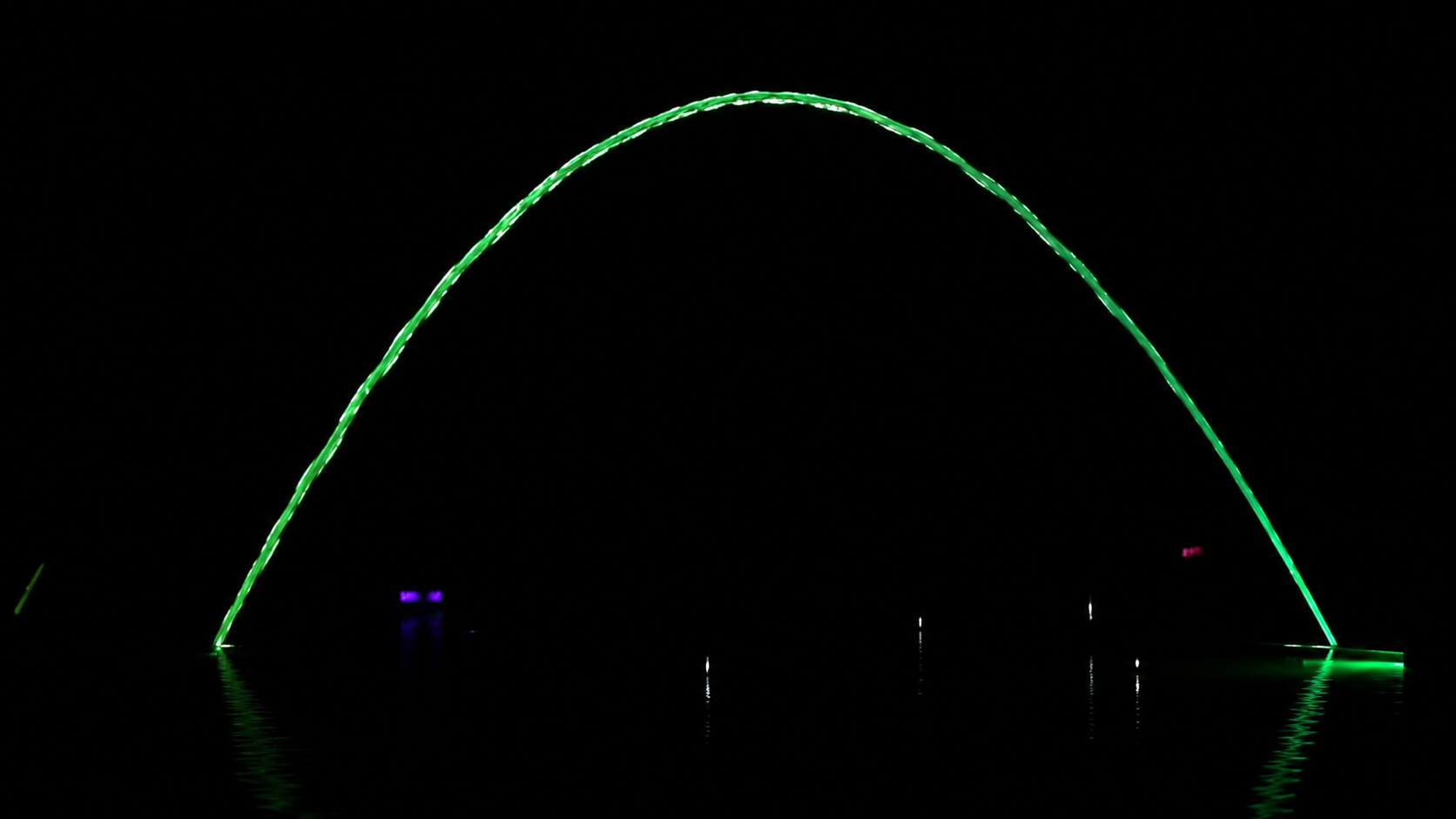
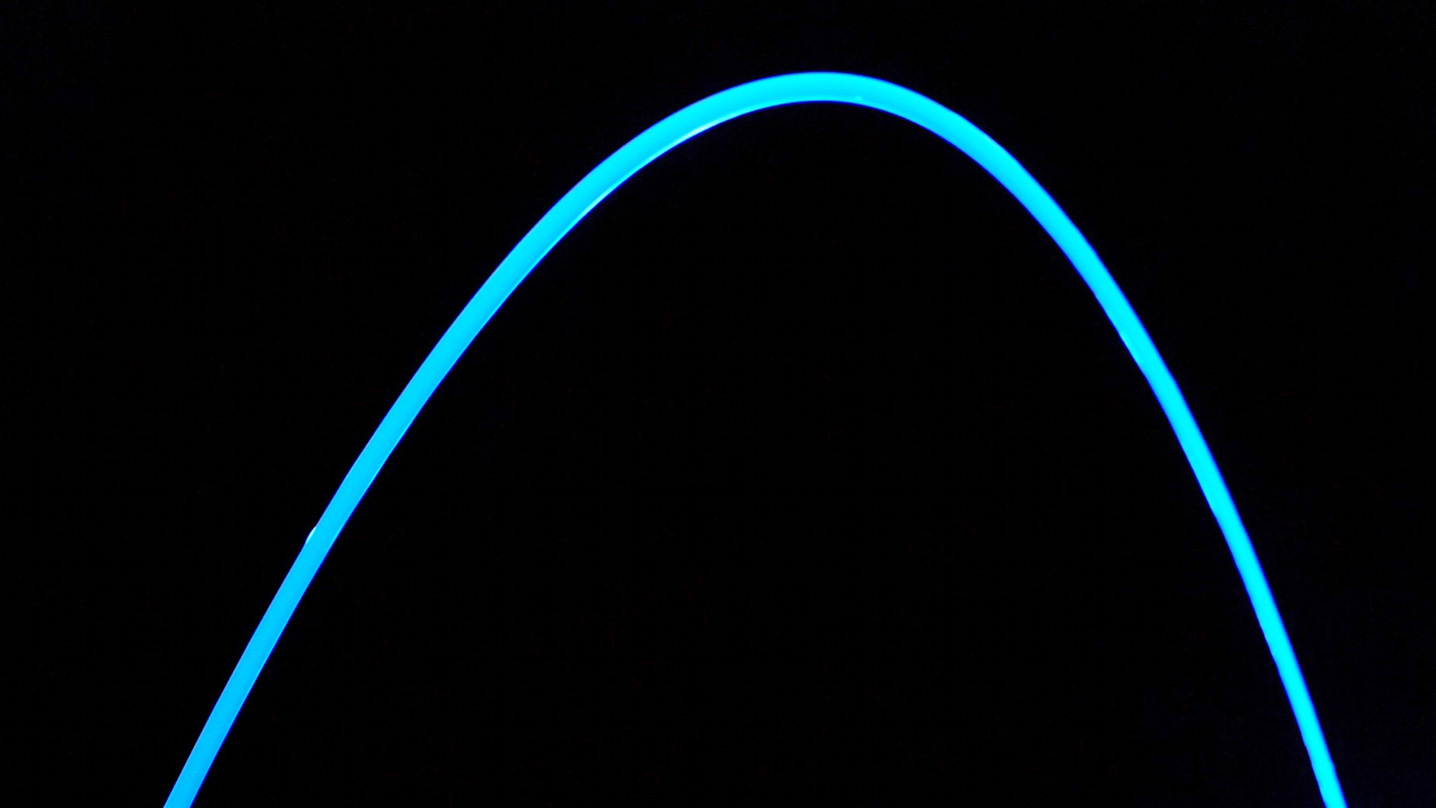
So sánh giữa một dòng nước trơn tru, liền mạch và một dòng nước bị xáo trộn rõ rệt. Các hình ảnh chỉ mang tính chất minh họa trực quan, không phải là kết quả của một thử nghiệm thủy lực có kiểm soát.
Điều gì thực sự quyết định chất lượng của tia nước dạng dòng chảy tầng?
Several factors influence whether a fountain jet retains its glass-like appearance.
1. Flow Conditioning Inside the Nozzle
Water supplied by a pump may contain velocity fluctuations, swirling motion, and disturbances created by bends, valves, and other components.
A laminar fountain unit is designed to condition the incoming flow before the water reaches the outlet.
Depending on the equipment design, internal passages and flow-straightening elements can help reduce undesirable motion and produce a more controlled exit flow.
The effectiveness of these elements depends on their geometry and on the operating flow rate.
Flow conditioning does not automatically guarantee a fully laminar flow state. Its practical role is to improve the conditions from which the visible water jet forms.
2. Outlet Geometry and Surface Condition
The final outlet shapes the boundary between the water and the surrounding air.
Outlet geometry influences the velocity distribution and the disturbances introduced as water leaves the nozzle.
Uneven surfaces, poor alignment, or damage near the outlet can affect jet symmetry and produce visible irregularities.
The outlet should therefore be evaluated as a hydraulic component, not simply as a hole with a specified diameter.
3. Stable Water Supply
A nozzle with effective internal flow conditioning can still produce an unstable arc if the upstream supply fluctuates excessively.
Potential sources of disturbance include:
The pump, pipework, valves, and nozzle must be considered as a connected system.
For equipment selection, the listed pump head should not be confused with the actual velocity at the nozzle outlet. The final hydraulic calculation must account for system losses and operating conditions.
4. Water Quality and Entrained Air
Water clarity and hydraulic stability are related but different issues.
Suspended particles may reduce optical clarity, even if the jet surface is smooth. Entrained air bubbles can scatter light and disturb the visible appearance of the stream.
Filtration, water circulation, and the prevention of unwanted air entry therefore play important roles in maintaining the effect.
A fountain can have a mechanically stable jet and still appear cloudy because of water-quality problems.
5. Environmental Conditions
Once water leaves the nozzle, it is exposed to gravity, air resistance, and wind.
Surface disturbances may grow as the jet travels. Eventually, the continuous water column can break into droplets.
A fountain jet that appears smooth near the outlet may show waves or breakup farther along its arc.
This is why performance should be observed over the entire required trajectory, rather than only at the nozzle exit.
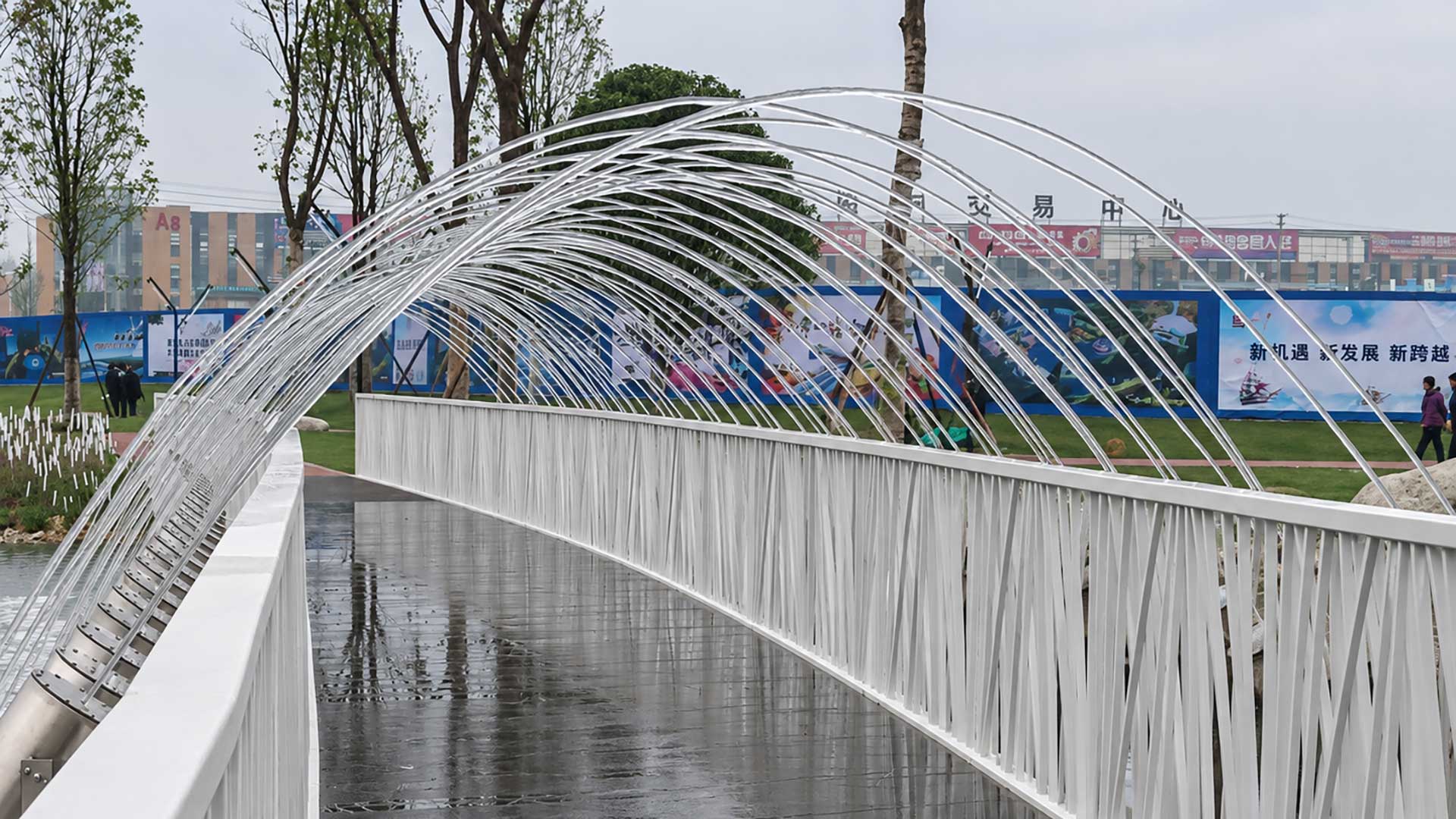
Số Reynolds không phải là tham số duy nhất: Vai trò của sức căng bề mặt
Reynolds number compares inertial and viscous effects. It does not directly describe the balance between inertia and surface tension at the water-air interface.
For that purpose, engineers may also consider the Weber number (We):
We = ρV²D / σ
Where σ is the surface tension of water (N/m).
Surface tension helps resist deformation of the water surface. Disturbances can grow along a liquid jet and contribute to its eventual breakup.
The breakup process depends on several interacting factors, including the initial disturbance level, velocity, jet diameter, viscosity, and surrounding air conditions.
Neither Reynolds number nor Weber number alone gives a universal prediction of the visible continuous length of every fountain nozzle.
For a project requiring a long, clear water arc, numerical calculations provide a starting point. Actual jet observations under representative conditions are also important.
Điều này áp dụng như thế nào đối với các vòi phun nước dạng tia nhảy?
A conventional laminar fountain jet is intended to form a continuous water arc.
A jumping fountain jet adds another function: it intentionally divides the water stream into separate sections.
The hydraulic principle behind producing a smooth stream remains relevant. However, an internal cutting mechanism introduces controlled interruptions to create the jumping effect.
The cutting sequence determines when water is separated. The hydraulic system determines how the water behaves before, during, and after those interruptions.
For a successful jumping effect, engineers should examine three aspects:
Stream quality before cutting. The water should form a sufficiently stable and defined arc under the operating conditions.
Segment formation. The cutting mechanism must produce the intended separation and timing without excessive irregularity.
Recovery after cutting. The water stream should return to its intended continuous shape between cutting events, within the required sequence.
This distinction is important. A jumping jet is not simply an ordinary fountain nozzle with faster pump switching.
Huaxin’s Các tia nước nhảy múa use an internal cutting mechanism to produce separated water segments. Standard, submersible, and laser-illuminated configurations are available for different project layouts.
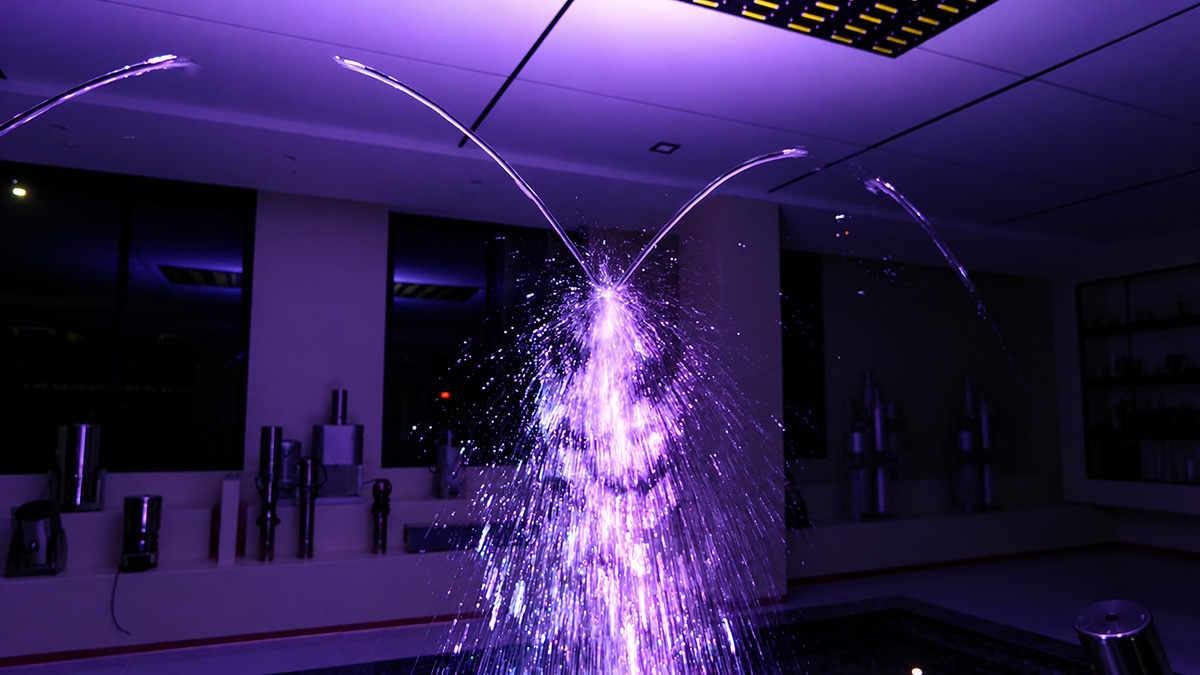
Liệu sự chiếu sáng có làm thay đổi các yêu cầu về thủy lực không?
Lighting changes how a water arc is perceived, but it does not eliminate the need for stable hydraulic conditions.
A smooth water-air interface can help preserve a visually defined illuminated stream. Irregular surfaces, bubbles, and droplets can scatter light and change its appearance.
For this reason, a brighter light source cannot always compensate for an unstable water jet.
A laser-illuminated configuration may improve the visibility of the water effect under certain viewing conditions. Its actual appearance still depends on the interaction of the light source, water quality, flow stability, and surrounding illumination.
Huaxin offers Các tia nước dạng dòng chảy tầng in standard, submersible, and laser-illuminated versions.
Selection should be based on the desired visual result and the hydraulic and installation conditions, rather than lighting output alone.
Các kỹ sư nên đánh giá hiệu suất của tia dòng tầng như thế nào?
Calculating the Reynolds number is useful during preliminary hydraulic analysis. But practical evaluation should go further.
A structured evaluation can include the following checks.
| Evaluation item | What should be examined? |
|---|---|
| Outlet conditions | Jet diameter, actual flow rate, and operating pressure |
| Water arc | Height, span, landing position, and surface continuity |
| Visual quality | Transparency, surface irregularities, visible droplets |
| Flow stability | Sensitivity to pump fluctuation and air entrainment |
| Operating range | Performance at relevant flow settings |
| Jumping sequence | Segment consistency, timing, and stream recovery |
| Site conditions | Wind exposure, water quality, water level, and viewing conditions |
Testing should be carried out under documented conditions.
A useful test record identifies the nozzle configuration, water temperature, flow rate, pressure measurement location, and observed jet behavior.
For jumping jets, video is particularly valuable because static photographs cannot show cutting timing and recovery reliably.
For project-specific designs, the target height and span also need to be coordinated with the overall fountain layout.
Các câu hỏi thường gặp về kỹ thuật
No. Re below 500 is not a universal requirement for commercial laminar fountain jets. A nozzle must be evaluated using its actual hydraulic conditions, flow quality, and required visual performance.
No. A high Reynolds number indicates stronger inertial effects relative to viscous effects. Jet breakup also depends on the initial disturbances, nozzle geometry, surface tension, and surrounding conditions.
Possible causes include entrained air, suspended particles, unstable water supply, outlet contamination, or excessive disturbances within the water stream. These conditions should be investigated individually.
No. Nozzle selection also requires the target jet height, span, outlet diameter, flow rate, pressure conditions, water level, installation arrangement, and any lighting or jumping functions.
Kết luận kỹ thuật
Reynolds number is an important hydraulic parameter, but it should not be treated as a direct measure of fountain water clarity.
A glass-like fountain jet depends on the combined behavior of the nozzle, water supply, free jet, and surrounding environment.
For continuous laminar arcs, the engineering goal is a stable and visually defined stream over the required distance. For jumping jets, consistent segment formation and controlled recovery must also be considered.
The most reliable design approach combines hydraulic calculations, suitable equipment geometry, and practical performance verification.
Huaxin Fountain manufactures HỆ THỐNG ĐÀI PHUN NƯỚC TẦNG VÀ ĐÀI PHUN NƯỚC NHẢY for commercial fountain projects and programmed water shows. Project-specific equipment selection should be based on the intended effect, operating conditions, and installation requirements.
For further technical and project-planning guidance, visit the Huaxin Fountain Knowledge Center.
Tài liệu tham khảo kỹ thuật
1. National Institute of Standards and Technology (NIST). Guide to the SI, Chapter 8. Reference for viscosity units and symbols.
2. Sengers, J. V., and Kamgar-Parsi, B. (1984). Representative Equations for the Viscosity of Water Substance. Journal of Physical and Chemical Reference Data, 13(1), 185–205.
3. Falvey, H. T. (1980). Air-Water Flow in Hydraulic Structures. Engineering Monograph No. 41, U.S. Bureau of Reclamation. See the discussion of free-falling water jets.
4. The Effect of Nozzle Design on the Stability and Performance of Turbulent Water Jets. Fire Safety Journal, 1981.
5. A Short Note about the Impact Action of a Water Jet Stabilized by a Coaxial Air Stream in the Air and Underwater. Materials, 2021. Discussion of Reynolds number, Weber number, and liquid-jet breakup.
Technical note: The numerical example in this article is an illustrative calculation, not a certified performance test or acceptance criterion for any specific fountain equipment.
Need Help Selecting a Laminar Fountain Jet?
Share your required jet height, span, installation conditions, and lighting preferences. Huaxin Fountain can help review suitable laminar or jumping jet configurations for your project.
Địa chỉ
Số 399, đường An Thái, Khu Phát triển Kinh tế, thành phố Nội Giang, tỉnh Tứ Xuyên, Trung Quốc.