Water Screen Projection Systems for Multimedia Fountain Shows

Transform water into a large-scale projection surface for video, animation, branding, and immersive show content.

Huaxin Fountain designs and supplies custom water screen projection systems for lakes, pools, plazas, tourism destinations, festivals, and multimedia fountain shows. Depending on the project, the projection surface can be created with a dedicated fan-shaped water screen generator or with a custom field of densely arranged water jets.

From hydraulic design and water screen equipment to fountain integration, control programming, installation guidance, and commissioning, the system can be developed around the site rather than forcing every project into one standard configuration.

Custom water screen methods for different site conditions
Dedicated water screen generators and large water-jet projection surfaces
Integration with fountain effects, lighting, laser, music, and show control
In-house fountain equipment manufacturing and overseas project support

Have site drawings, dimensions, BOQ, reference videos, or budget information? Send them to get a faster proposal.

What Is Water Screen Projection?

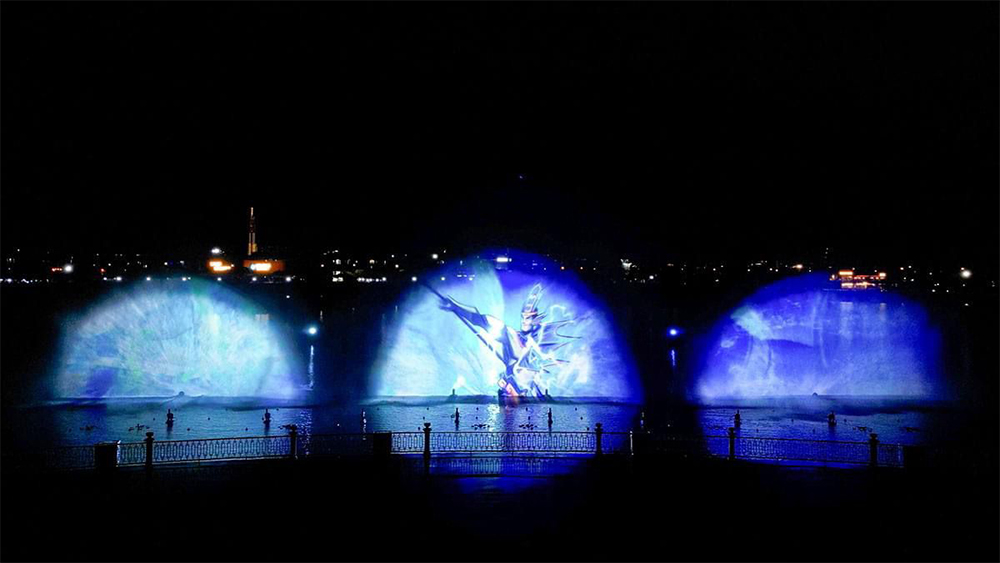
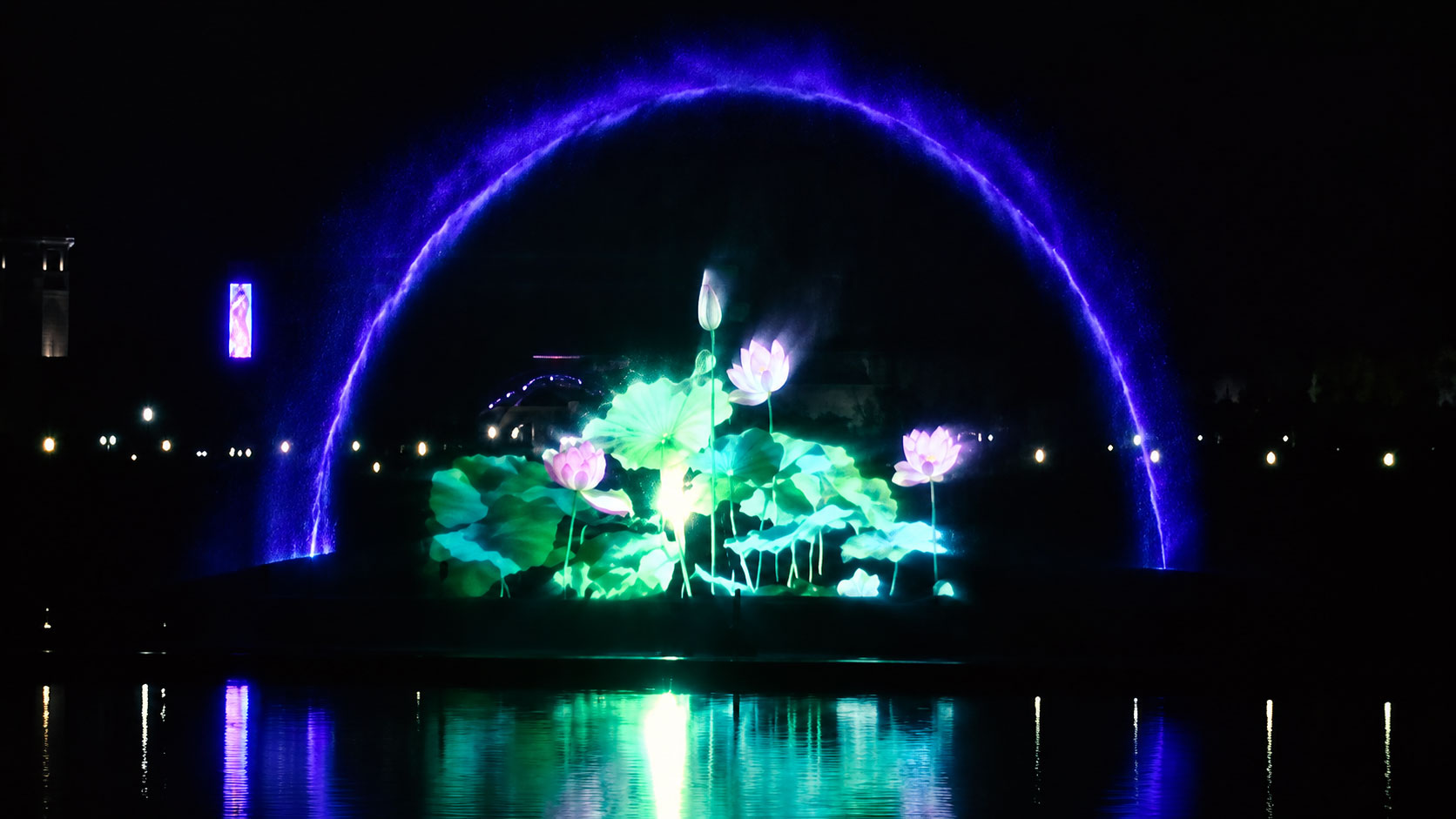
Water screen projection uses a controlled sheet, mist, or dense field of water as a temporary projection surface. Video, graphics, logos, animation, and other visual content can then appear over the water, creating an image that seems to float within the fountain or surrounding landscape.

Unlike a conventional solid projection screen, the water surface becomes part of the show itself. This makes water screen projection particularly suitable for nighttime attractions, tourism projects, festivals, commercial landmarks, and multimedia fountain performances.

The term water screen is commonly used for this type of system. You may also encounter terms such as water screen fountain, water curtain projection, or water screen movie fountain. In engineering terms, however, the exact screen-forming method can vary considerably from one project to another.

Outdoor water screen projection displaying visual content on a fountain water surface

Two Main Ways to Create a Water Screen for Projection

Not every water screen needs to be created in the same way. The screen method should be selected according to the required size, projection content, site conditions, fountain layout, wind exposure, and the overall show concept.
Huaxin Fountain can develop both conventional fan-shaped water screens and custom projection surfaces created with densely arranged water jets.

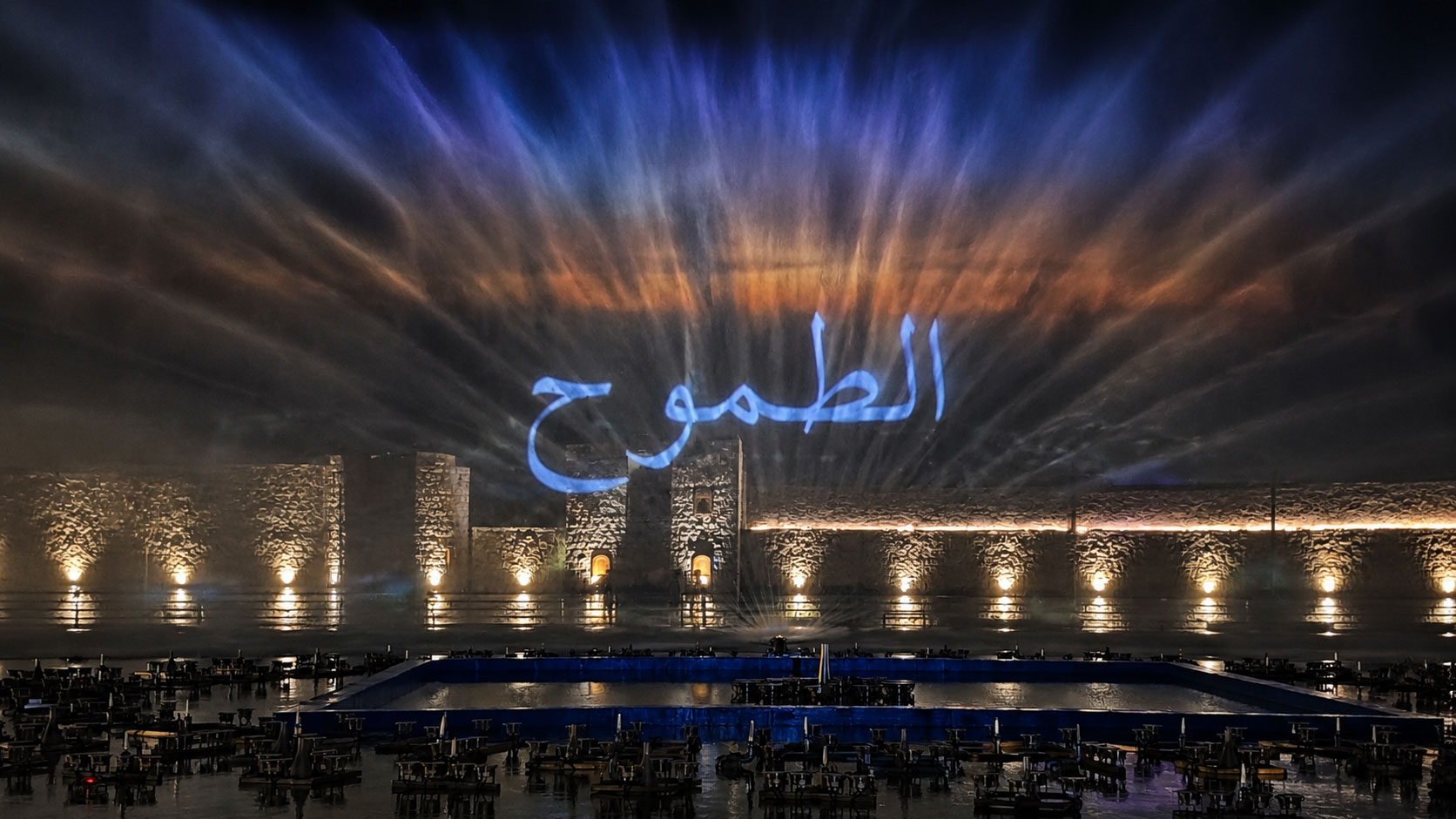
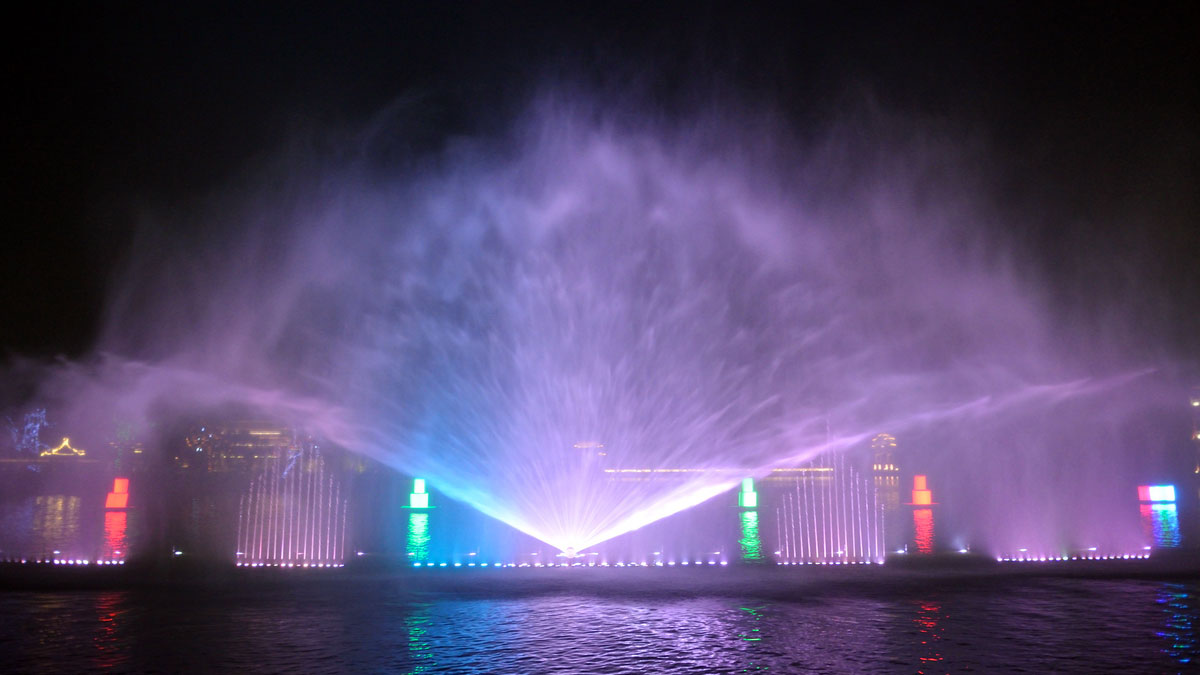
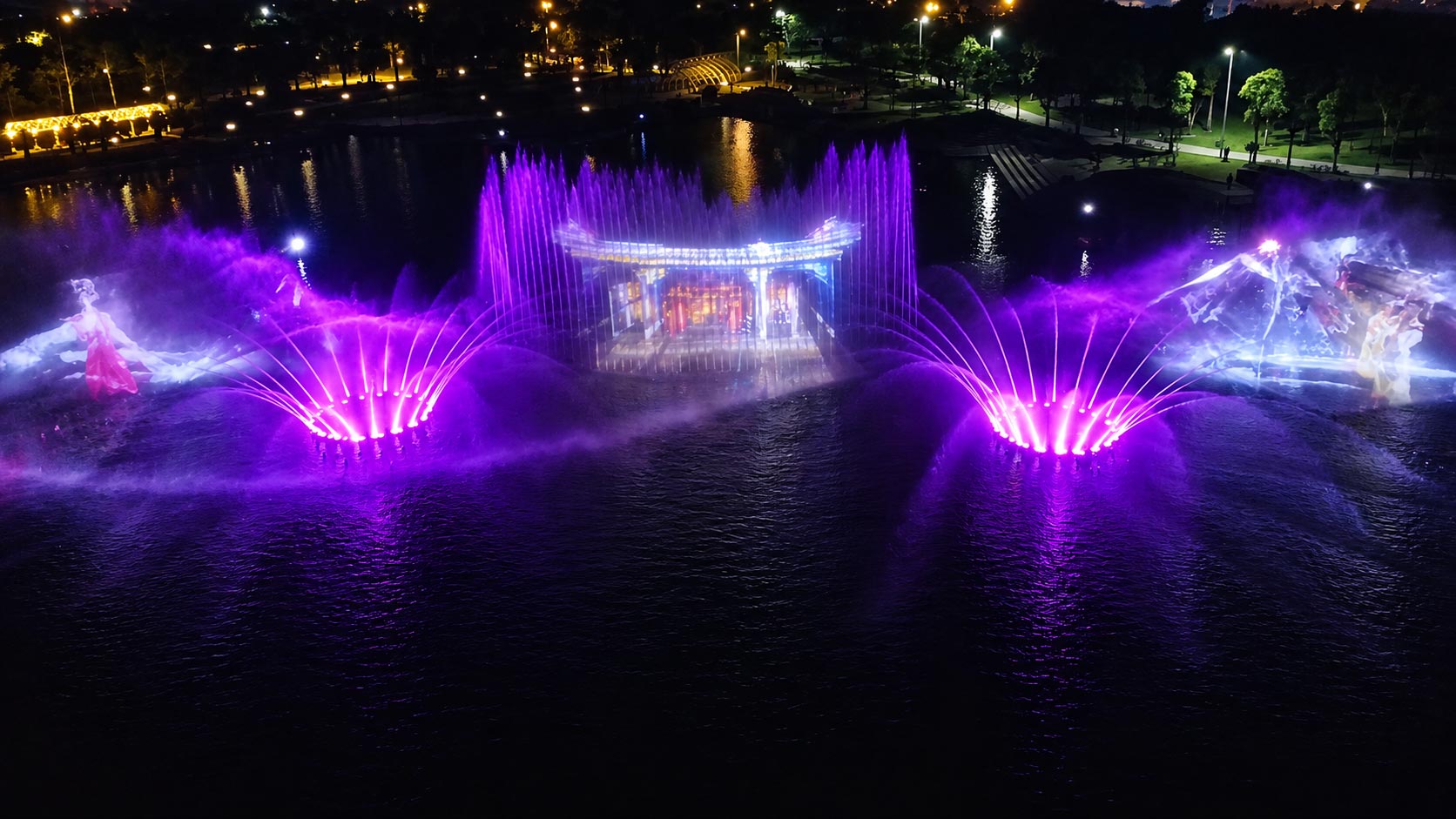
Fan-shaped water screen projection show at Valley Resort in Wadi Bin Hashbal, Aseer, Saudi Arabia

Dedicated Fan-Shaped Water Screen Generator

A dedicated water screen generator uses a specially designed nozzle and hydraulic supply system to spread water into a broad, relatively uniform fan-shaped surface. This is one of the most established methods for creating outdoor projection screens on lakes and large pools.

A typical system includes the water screen nozzle or generator, pump, piping, flow-stabilizing components, supporting structure, electrical controls, and projection equipment.

Proper hydraulic conditions are essential. The water should form a sufficiently uniform surface with limited visible rippling so that projected images remain readable.

Advantages
1. Well-defined projection surface
2. Established solution for lakes and pools
3. Suitable for video, animation, branding, and laser content
4. Compact screen-forming equipment compared with a large distributed jet field

Considerations
1. Screen geometry is normally fan-shaped
2. Performance is sensitive to wind
3. Larger screens require substantial flow and pressure
4. Projection position must be coordinated with spray direction and site layout

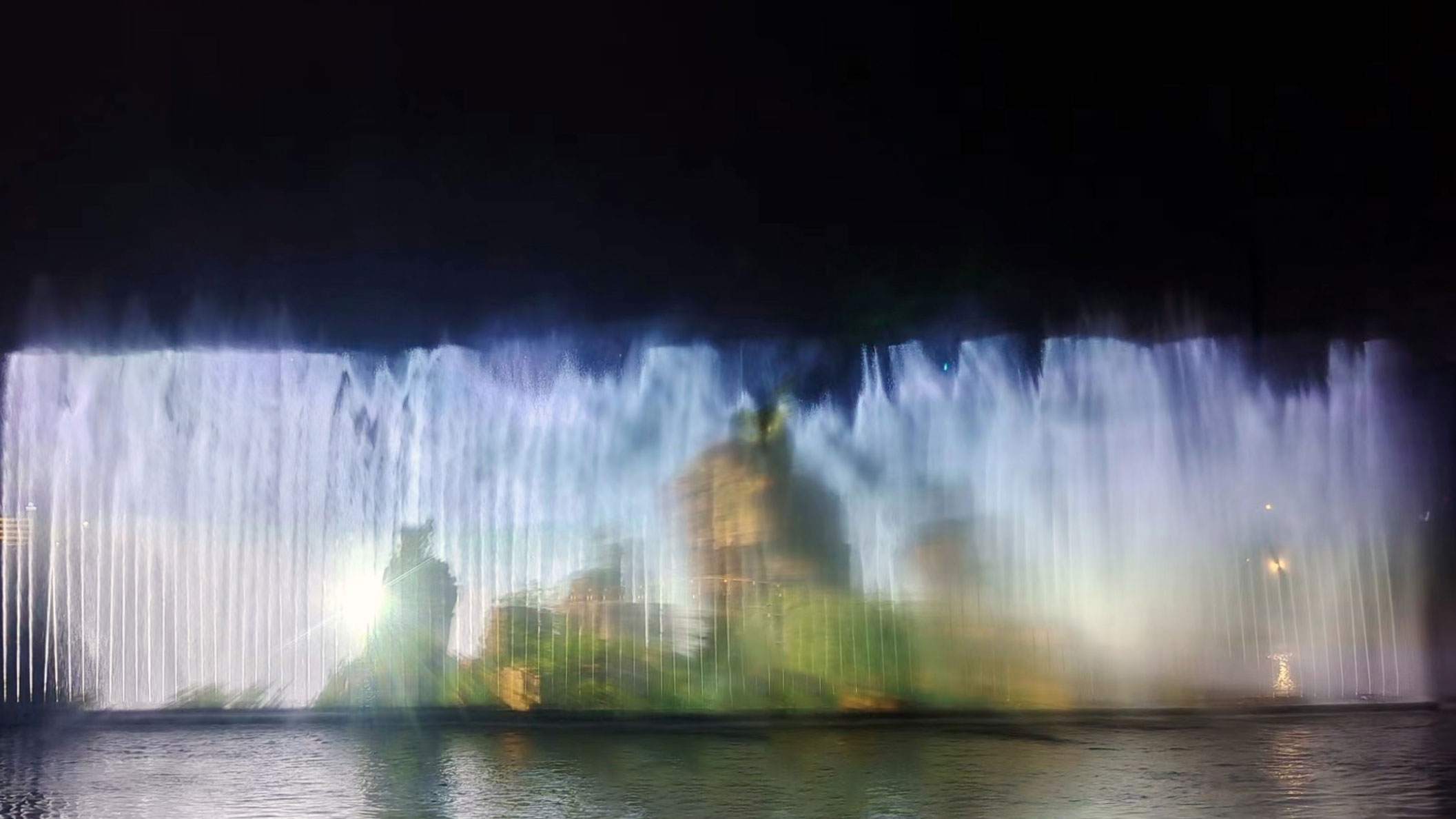
Large water screen projection in Jeddah Saudi Arabia created with densely arranged water jets

Projection on a Dense Water-Jet Curtain

A projection surface does not always need to come from a single fan-shaped water screen generator.

For some large or custom projects, closely spaced water jets can be arranged to create a broad curtain-like projection area. Instead of forming a conventional fan, the projection surface follows the geometry of the fountain layout.

This method was used in one of Huaxin Fountain’s projects in Jeddah, Saudi Arabia, where a large projection surface was created using densely arranged water columns rather than a standard fan-shaped screen.

Advantages
1. Greater flexibility in screen width and geometry
2. Can be integrated directly into a large fountain layout
3. Particularly useful where a very large projection area is required
4. Screen proportions are less restricted by the geometry of a single fan nozzle

Considerations
1. Projection surface is made from individual water streams rather than one continuous fan
2. Jet spacing, density, height, wind conditions, and projection content affect visual quality
3. Hydraulic design and programming can be more complex
4. Image sharpness and continuity depend heavily on the final screen configuration

Which Water Screen Method Is Better for Your Project?

FactorDedicated Water Screen GeneratorDense Water-Jet Projection Curtain
Typical screen shapeFan-shapedFlexible / custom
Screen continuityMore uniform water sheetFormed by multiple dense jets
ScaleMedium to largeMedium to very large
Layout flexibilityMore limitedHigh
Fountain integrationAdded as a dedicated show elementCan become part of the fountain layout
Best suited toLake, pool and standard projection showsLarge custom fountain and multimedia projects

There is no single “best” method for every project. We normally select the screen method after reviewing the required image size, viewing distance, site geometry, wind conditions, fountain layout, and overall show concept.

How a Water Screen Projection System Works

A successful water screen show depends on more than the visible water surface. Hydraulic design, screen formation, projection equipment, control systems, and site conditions must work together.

Large outdoor water screen projection show for tourism and public entertainment projects

Lake & Waterfront Shows

Large lakes and waterfront environments provide viewing distance and open space for large water screens, making them suitable for tourism shows and nighttime attractions.

Tourism & Entertainment Destinations

Water screen projection can become part of a scheduled attraction combining fountain choreography, music, laser, lighting, and visual storytelling.

Commercial Landmarks

Shopping complexes and mixed-use developments can use projection content for branding, seasonal campaigns, events, and nighttime visitor attraction.

Festival & Event Venues

Water screen projection can support temporary or recurring festival programs with customized media content and synchronized fountain effects.

How a Water Screen Projection System Works

A successful water screen show depends on more than the visible water surface. Hydraulic design, screen formation, projection equipment, control systems, and site conditions must work together.

Key Design Factors for Water Screen Projection

Larger is not automatically better. The screen dimensions should be selected together with viewing distance, projector capability, content resolution, and site proportions.

A water screen requires enough flow and pressure to maintain the intended height and coverage. Flow stabilization is equally important because excessive rippling or uneven distribution can reduce projection quality.

Engineering references for fan-shaped systems commonly use a near-semicircular spray geometry. Minor adjustment of nozzle orientation may be used to improve the smoothness and stability of the projection surface.

Wind is one of the most important outdoor design factors. Screen orientation, screen height, operating limits, and projection content should all consider local wind conditions.

Projection distance and equipment position must be coordinated with screen size and site access. Where projection equipment is installed close to water, suitable weather and water protection is required.

Nozzle condition, filtration, hydraulic cleanliness, and maintenance access affect long-term screen uniformity and operating stability.

Engineering Reference — Fan-Shaped Water Screen

Reference fountain engineering data shows that water screen requirements increase significantly as screen size grows.
For example, a large fan-shaped water screen may require approximately:

Screen HeightApprox. FlowApprox. Working Pressure
6 m1,700 L/min5.0 bar
9 m2,350 L/min8.1 bar
12 m2,750 L/min11.0 bar
18 m3,050 L/min12.4 bar
24 m3,300 L/min14.8 bar
30 m3,500 L/min16.2 bar

These figures are reference values only. Final hydraulic requirements depend on nozzle type, screen geometry, pipe losses, installation conditions, and selected equipment.

Water Screen System Options

Nozzle size alone does not determine the final screen. Pump selection, hydraulic losses, flow stabilization, structural support, operating water level, wind exposure, and projection geometry all need to be considered together.

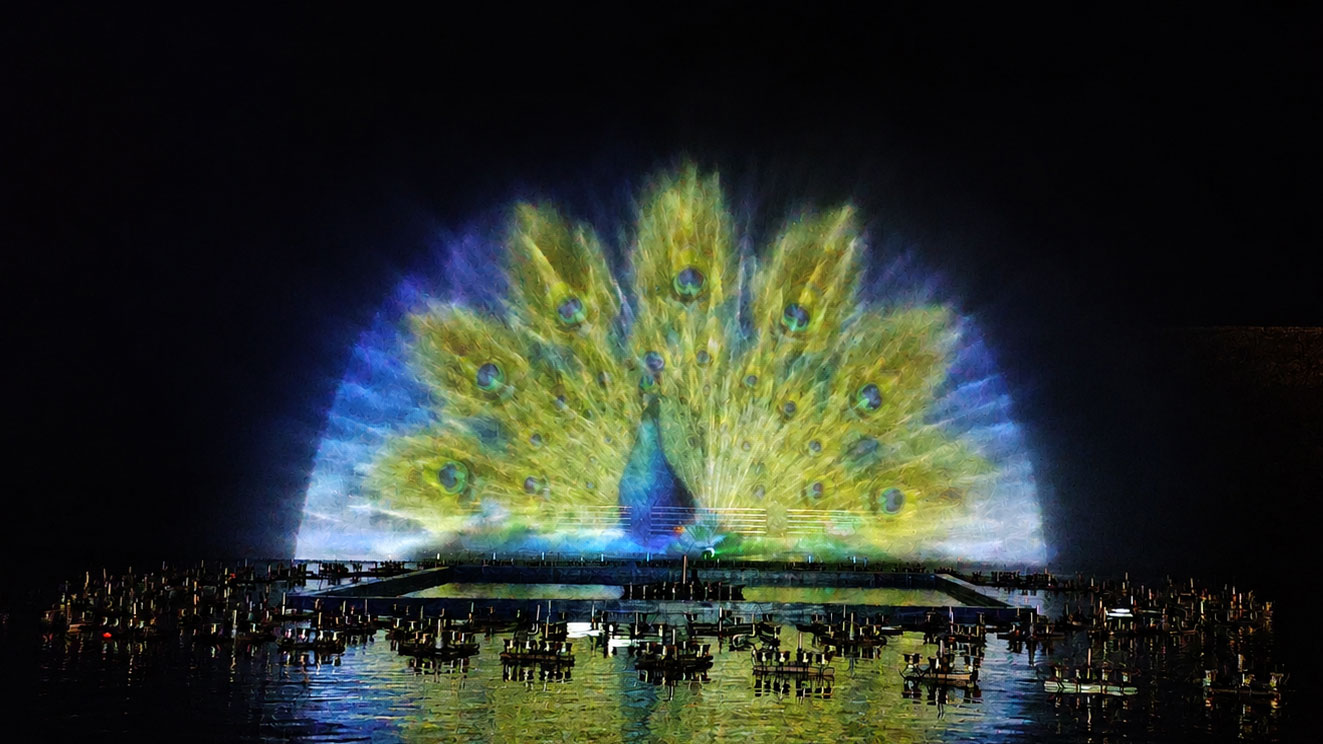
Water screen projection project at Phoenix Lake in Yuanmou County, Yunnan, China

Standard Fan-Shaped Water Screen Nozzle

Suitable for smaller or medium projection surfaces where a defined fan-shaped screen is required.

Large fan-shaped water screen projection system in Aseer Saudi Arabia

Large Water Screen Generator Systems

Designed for larger outdoor projection applications requiring greater flow, pressure, and screen coverage.

Large water screen projection in Jeddah Saudi Arabia created with densely arranged water jets

Custom Water-Jet Projection Surfaces

For projects where conventional screen geometry cannot achieve the required scale or show concept, custom jet arrangements and screen structures can be engineered around the site.

Water Screen Projection Project Workflow

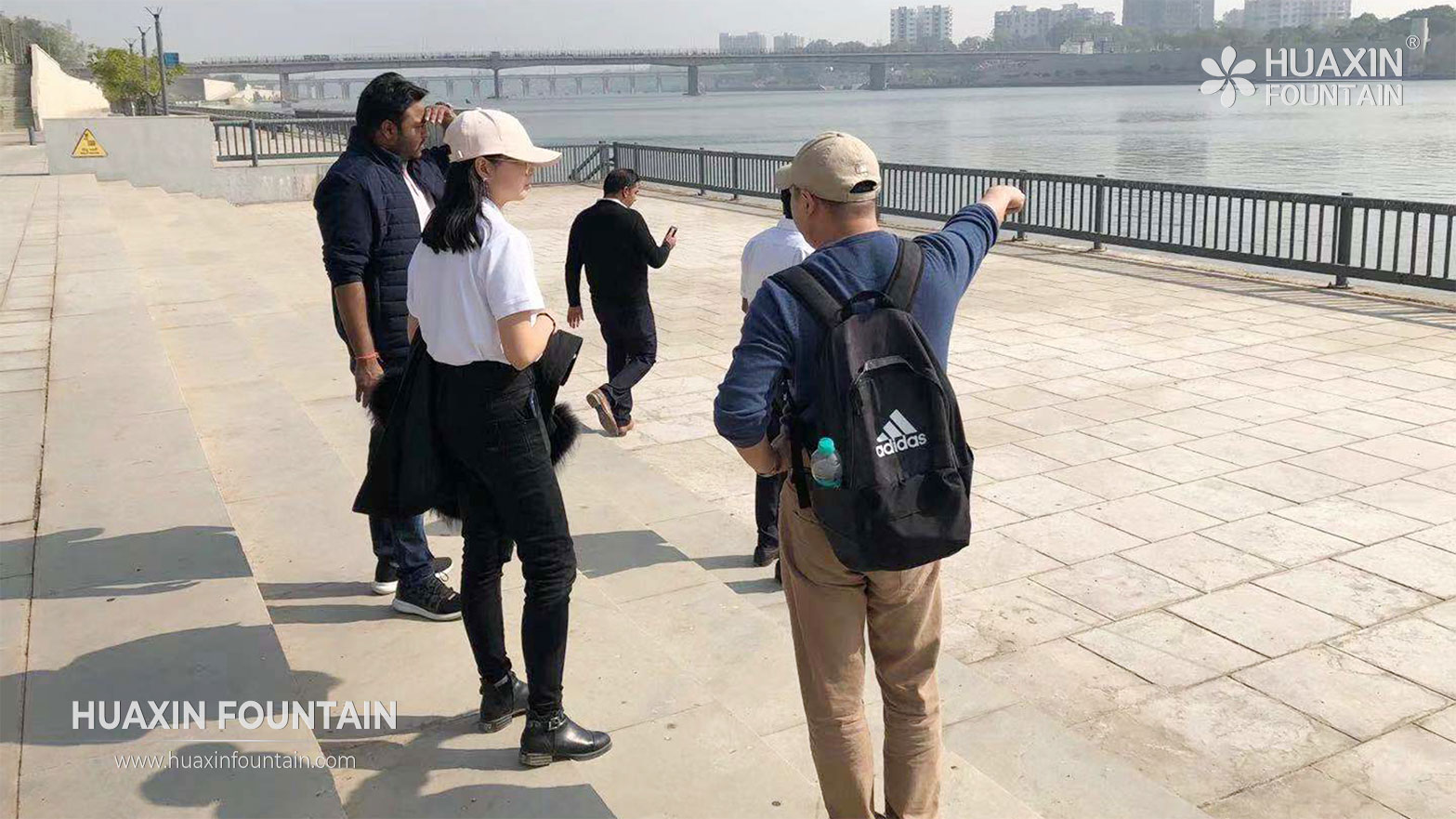
Engineer reviewing site conditions and show requirements for a water screen projection project

01 Site & Show Requirement Review

We review the water area, viewing direction, site dimensions, intended content, required screen scale, fountain integration, and project budget.
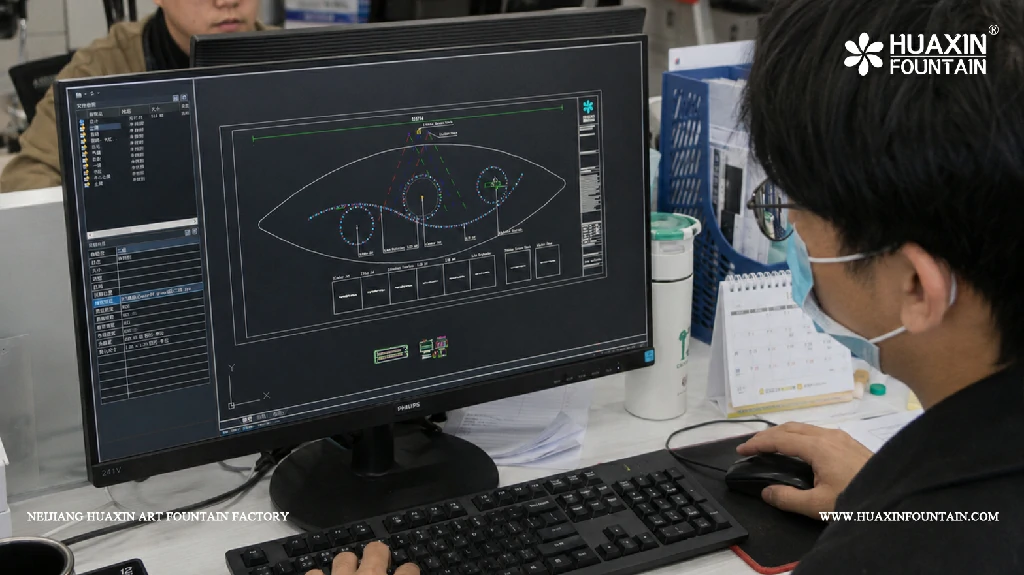
Designer preparing the fountain layout drawing for the Valley Resort project in Wadi Bin Hashbal, Saudi Arabia

02 Hydraulic & Equipment Design

Screen dimensions, nozzle configuration, pumps, piping, controls, supporting structure, and installation requirements are developed.
Projection and multimedia system coordination for a water screen show

03 Projection & Multimedia Coordination

Projector positioning, projection content, lighting, fountain effects, laser, and show control are coordinated as part of one system.

04 Equipment Manufacturing & Testing

Core fountain and water screen equipment is manufactured and prepared according to the approved design.
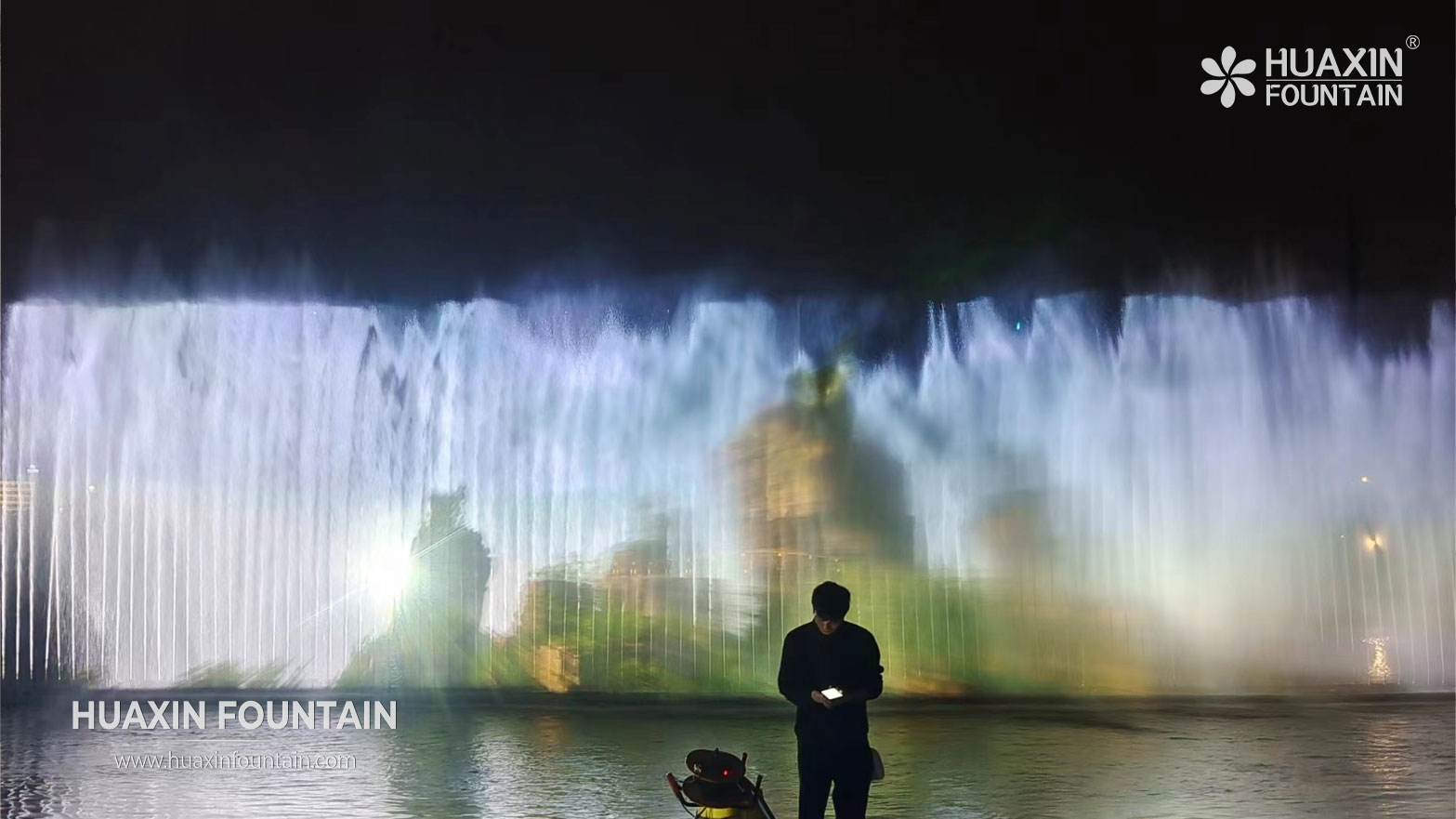
Installation and commissioning of a water screen projection system on site

05 Installation & Commissioning

Huaxin can support installation coordination, hydraulic adjustment, control programming, screen testing, and final commissioning.

Why Huaxin Fountain for Water Screen Projection Projects

FAQ About Water Screen Projection Systems

Water screen projection uses a controlled surface of water as a temporary projection screen for video, graphics, animation, logos, and show content.

Not always. “Water screen” commonly refers to a projection surface created for visual display, while “water curtain” can also describe vertically falling architectural water features. Some suppliers use the terms interchangeably, so the actual screen structure should always be confirmed.

No. Fan-shaped water screen generators are common, but a projection surface can also be created using densely arranged water jets or other custom hydraulic configurations.

The practical size depends on screen method, pump capacity, hydraulic conditions, wind exposure, projector capability, viewing distance, and site geometry. Large custom projection surfaces can be engineered when a standard fan-shaped screen is not suitable.

Yes. Lakes and large pools are common environments for outdoor water screen projection because they provide space for screen generation, projection positioning, and long viewing distances.

Yes. Projection content can be synchronized with musical fountain effects, DMX lighting, fountain choreography, laser, and other multimedia elements.

A typical project may require a water screen generator or custom jet system, pumps, piping, flow stabilization, supporting structure, control equipment, projection equipment, and multimedia programming.

Wind can distort or move the water surface, reducing image stability and visibility. Screen orientation, operating height, site conditions, and operating limits should therefore be considered during design.

Site drawings, water area dimensions, project location, required screen size, viewing distance, intended show content, fountain integration requirements, reference videos, and budget direction are useful for developing a preliminary proposal.

Request a Water Screen Projection Proposal

Planning a water screen projection for a lake, plaza, tourism destination, festival, or multimedia fountain show? Send us your site drawings, water area, required screen size, viewing direction, intended show content, and project requirements.

Our engineering team can help determine whether a dedicated fan-shaped water screen or a custom water-jet projection surface is more suitable before developing the hydraulic and equipment solution.

Address

No. 399, Antai Street, Economic Development Zone, Neijiang City, Sichuan Province, China.

Phone / WhatsApp / WeChat / Telegram

0086 18816238859

Follow Us:

Please enter your full name.
This field is required.
Please enter your company name.
This field is required.
Please enter a valid phone number.
This field is required.
Please describe your fountain project requirements in detail.
This field is required.
Scroll to Top