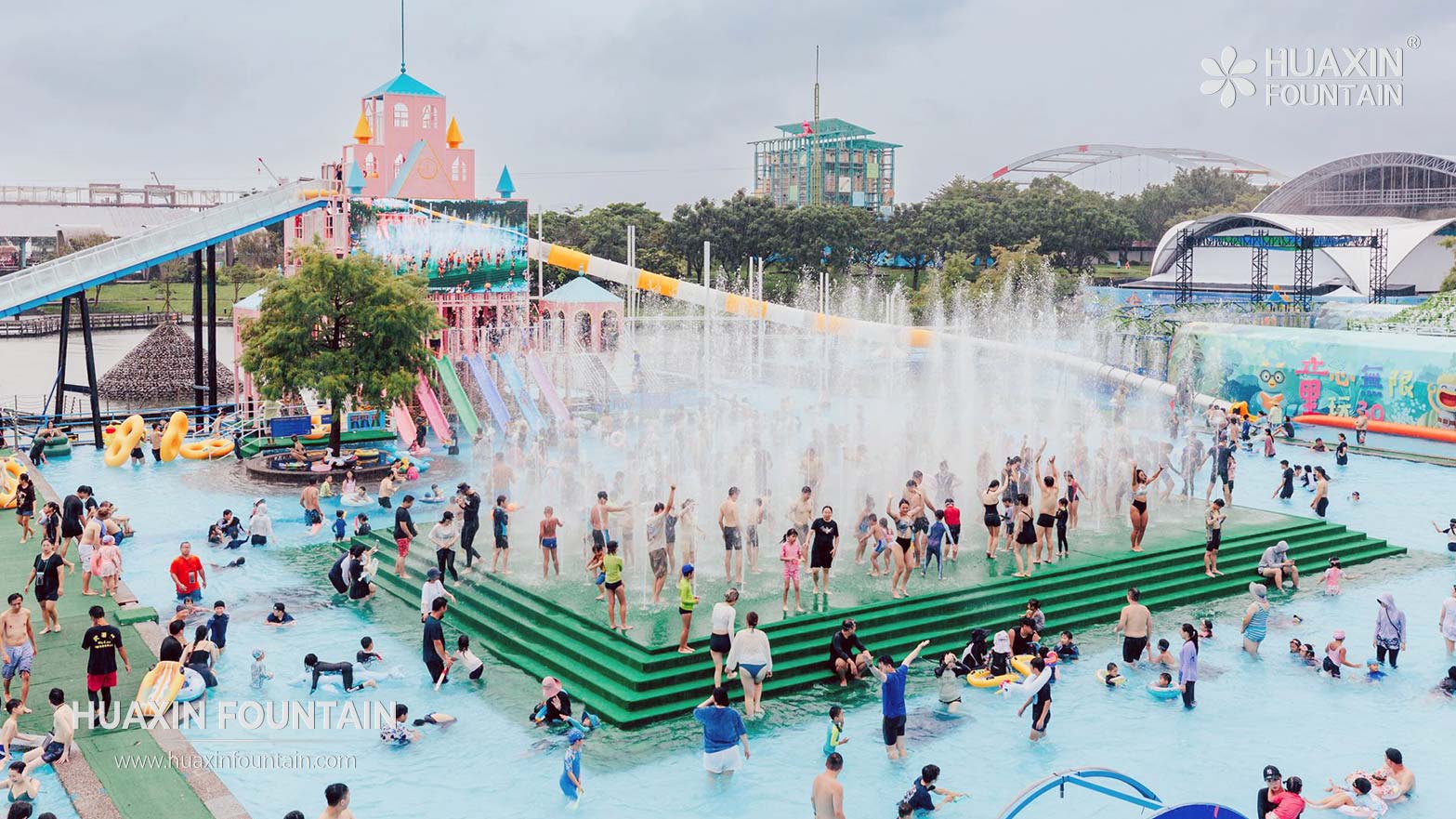
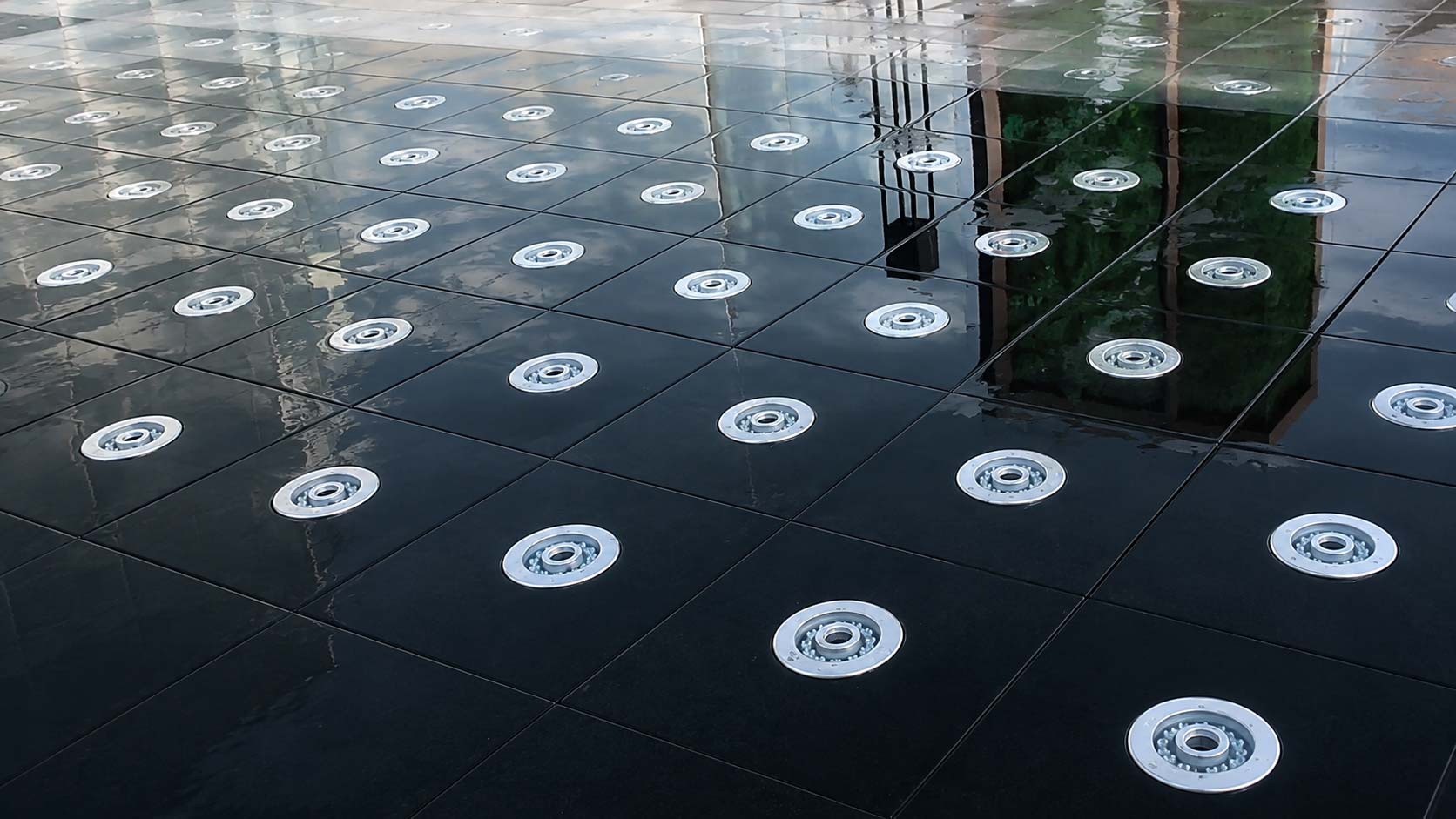
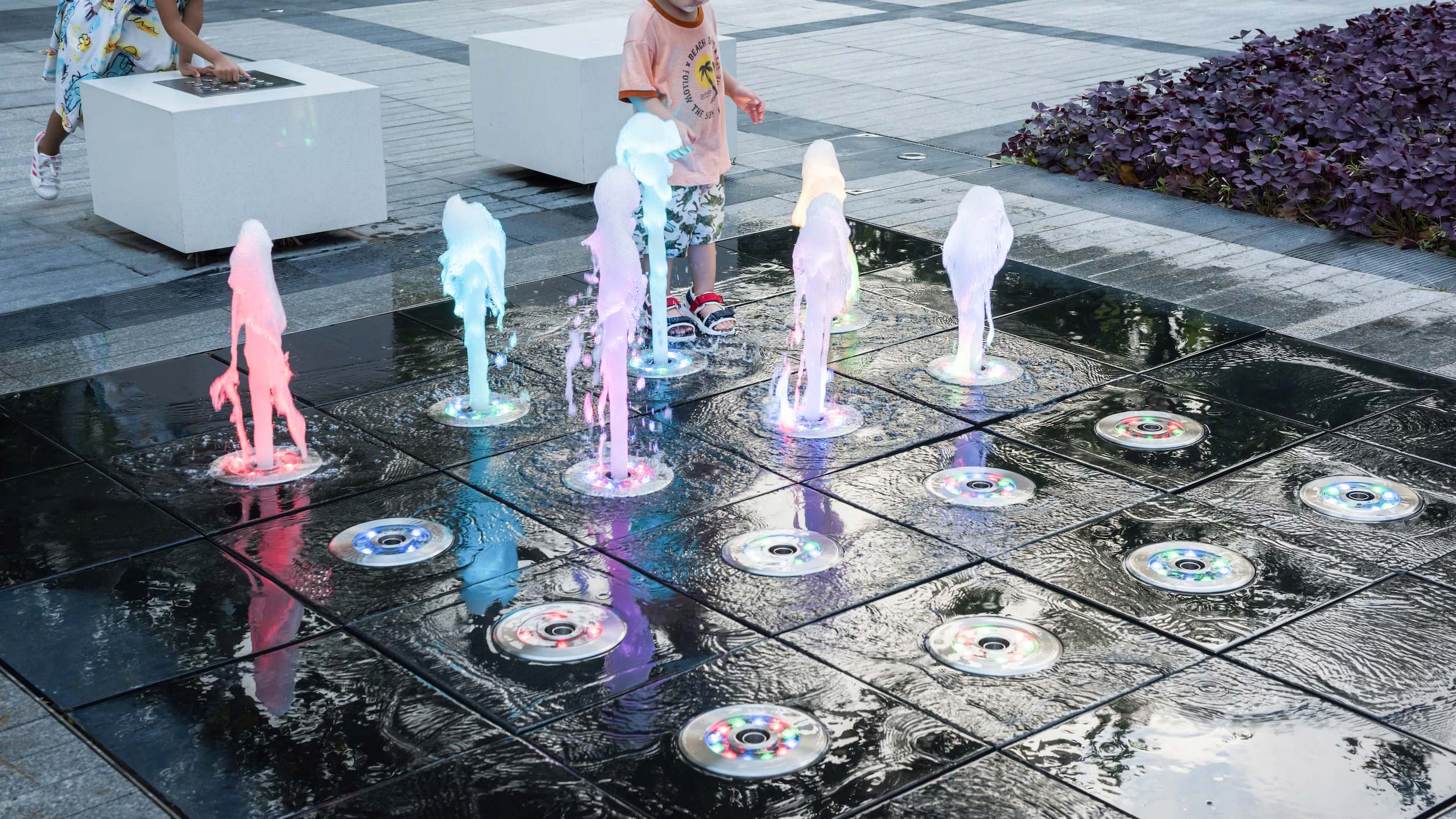
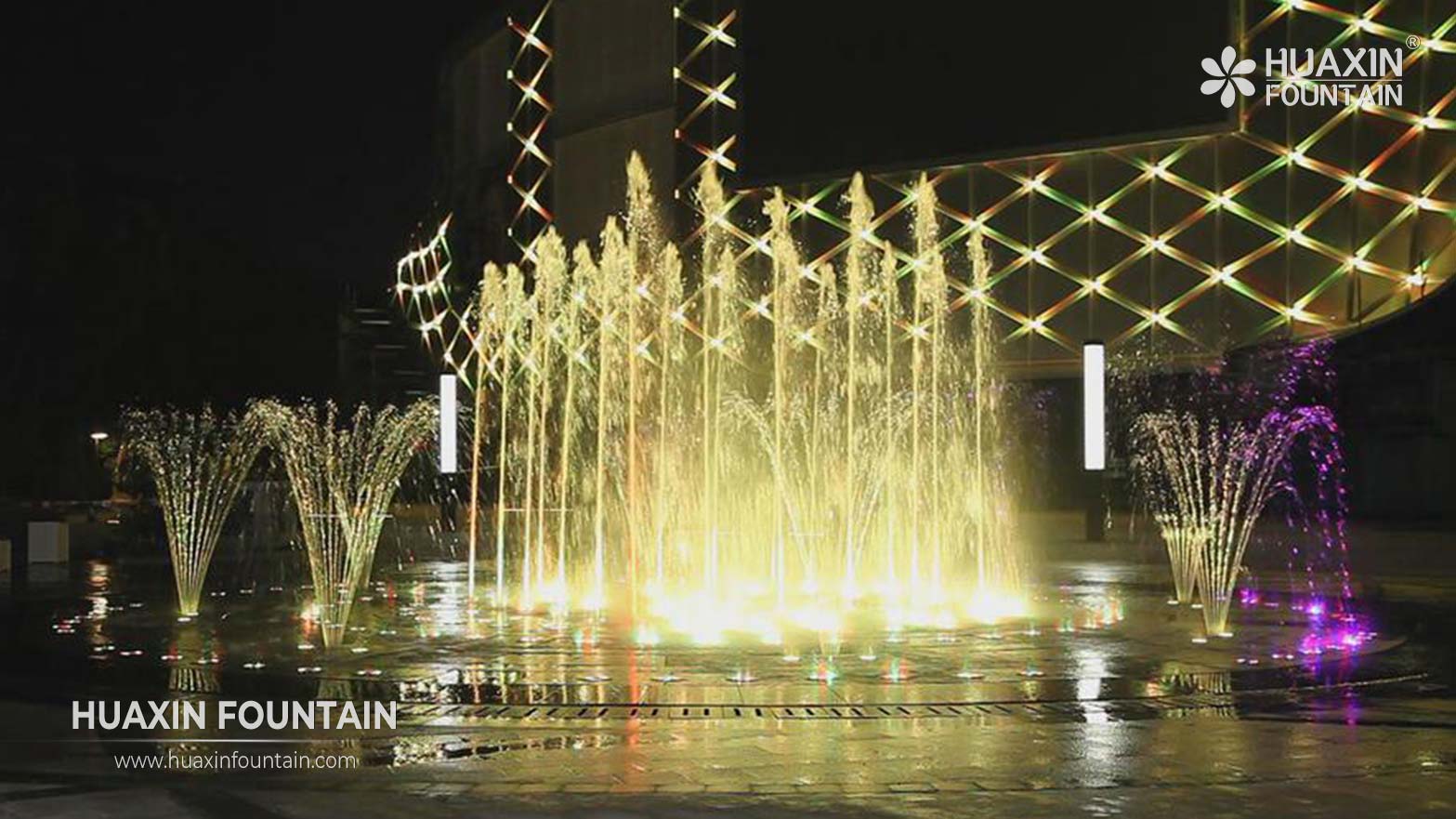
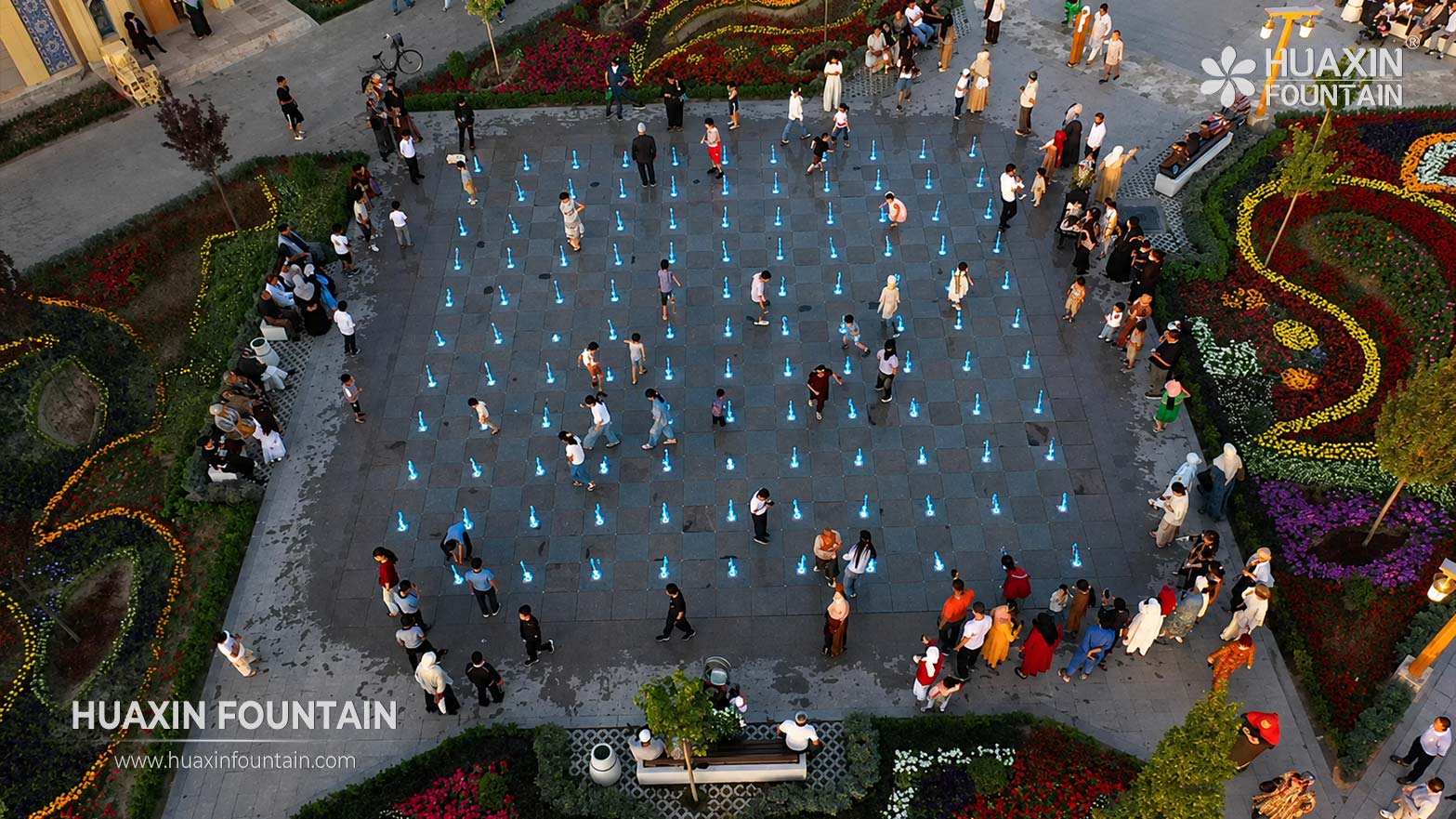
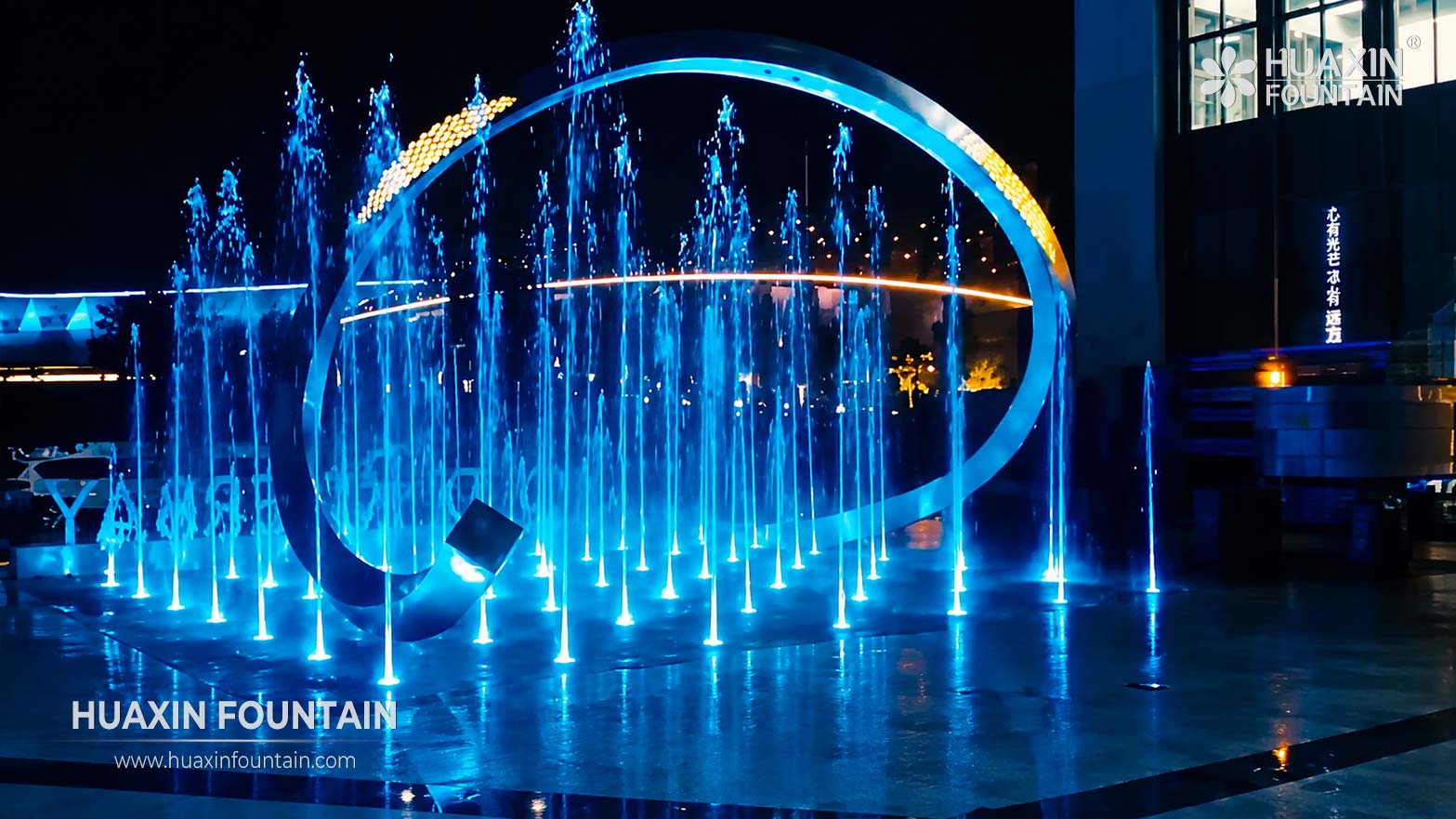
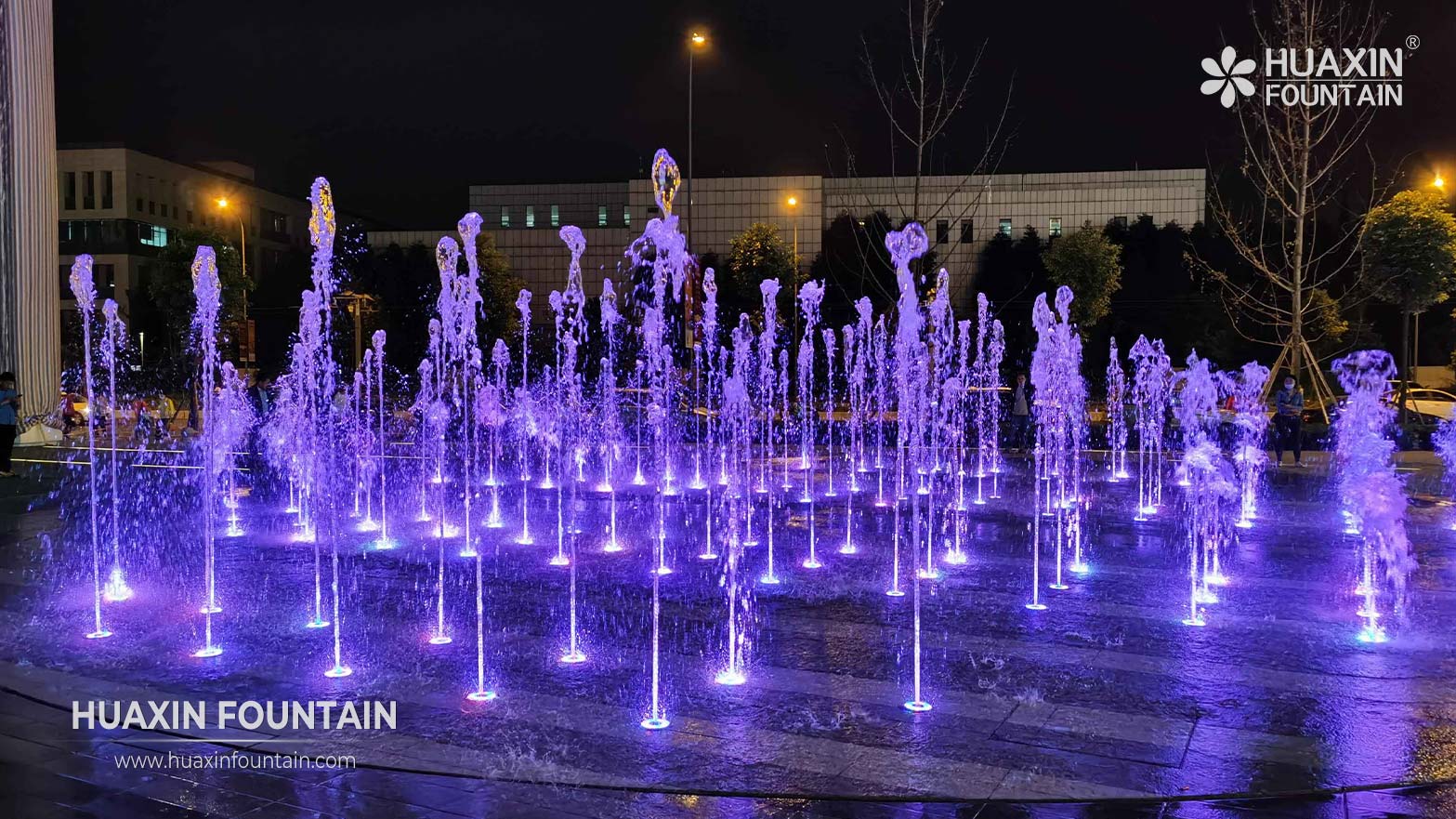
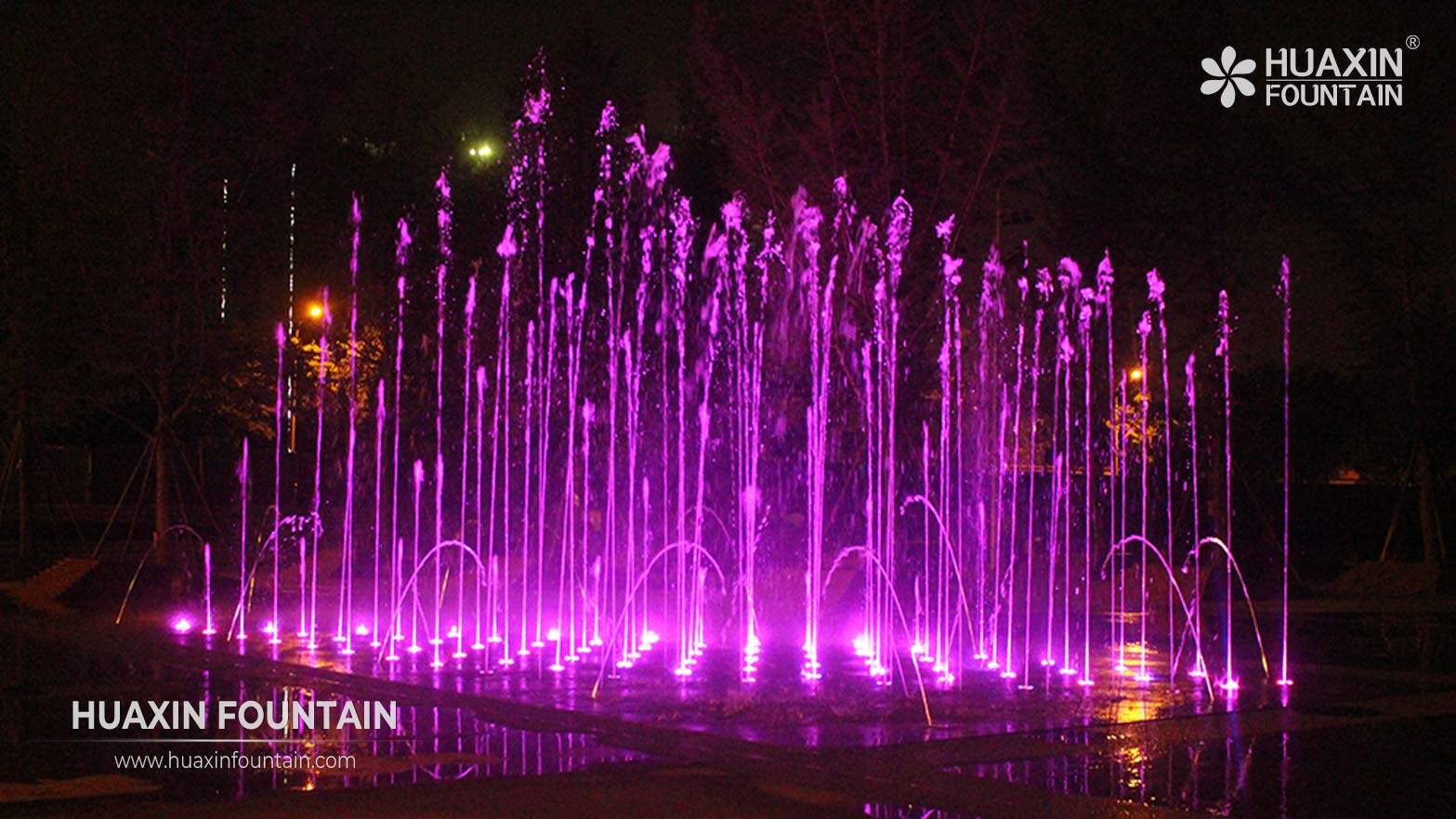
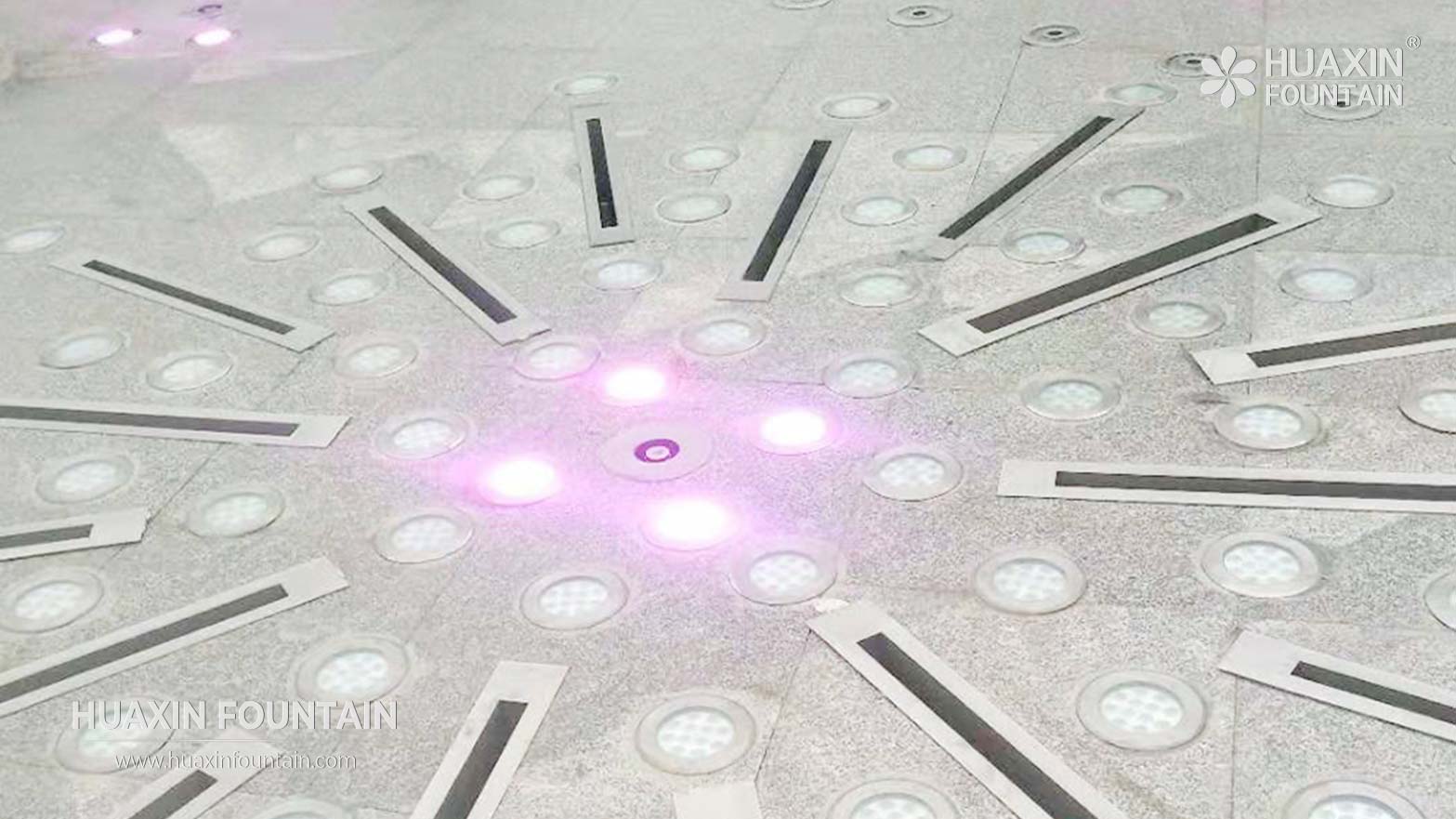
Nozzles are installed flush with or below the deck surface to create vertical jets, chasing effects, swing effects, or other programmed water patterns.
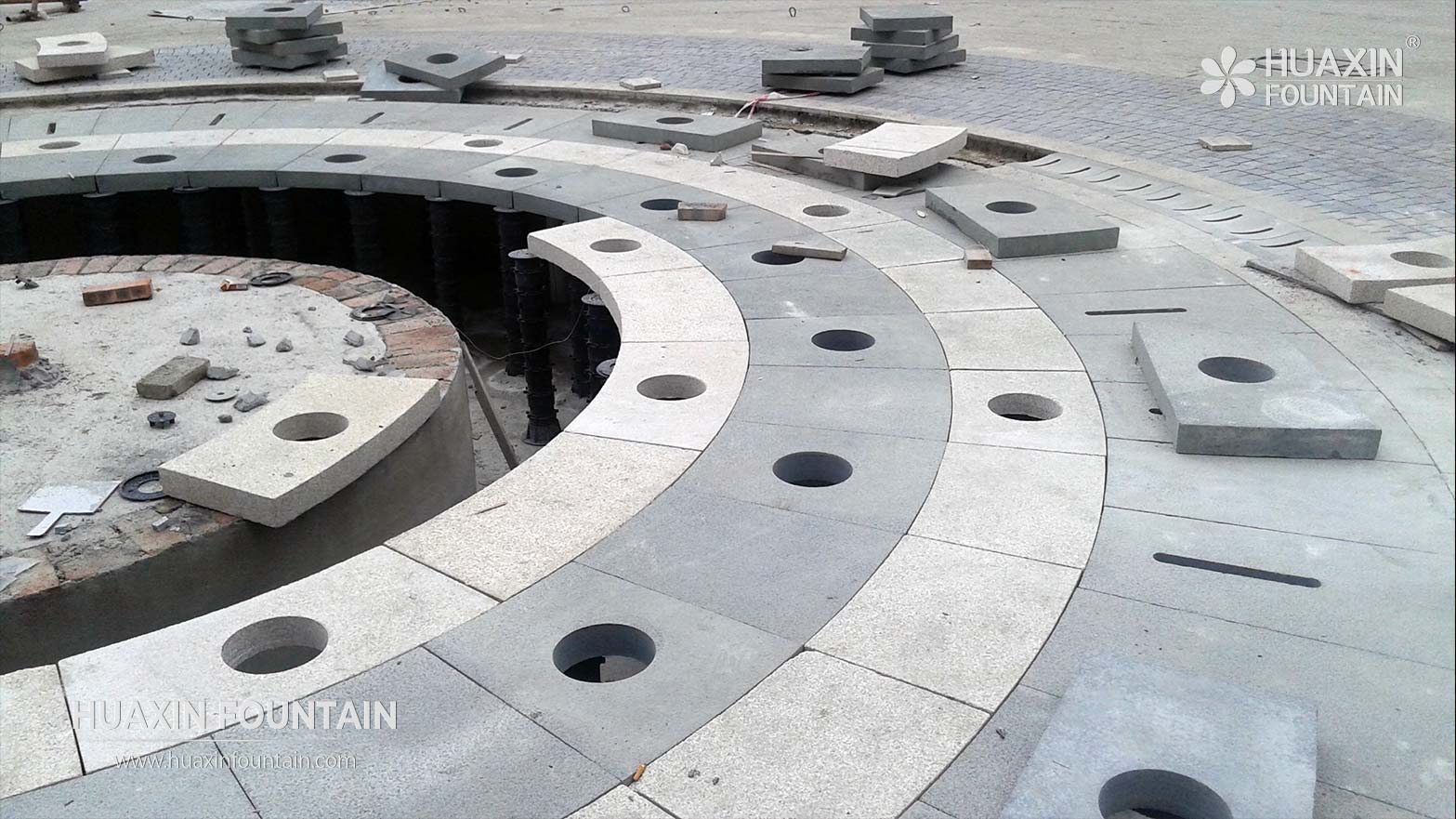
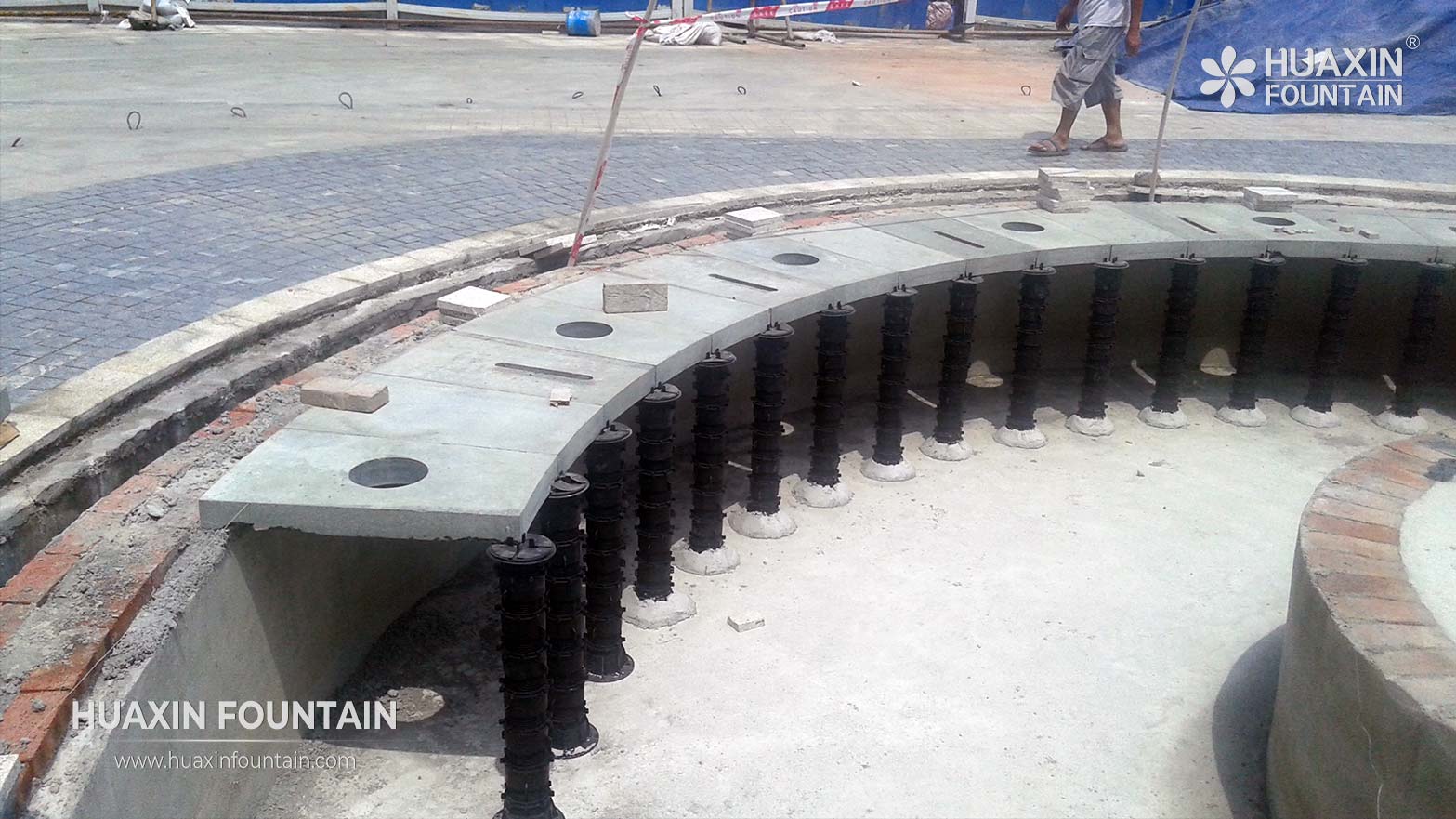
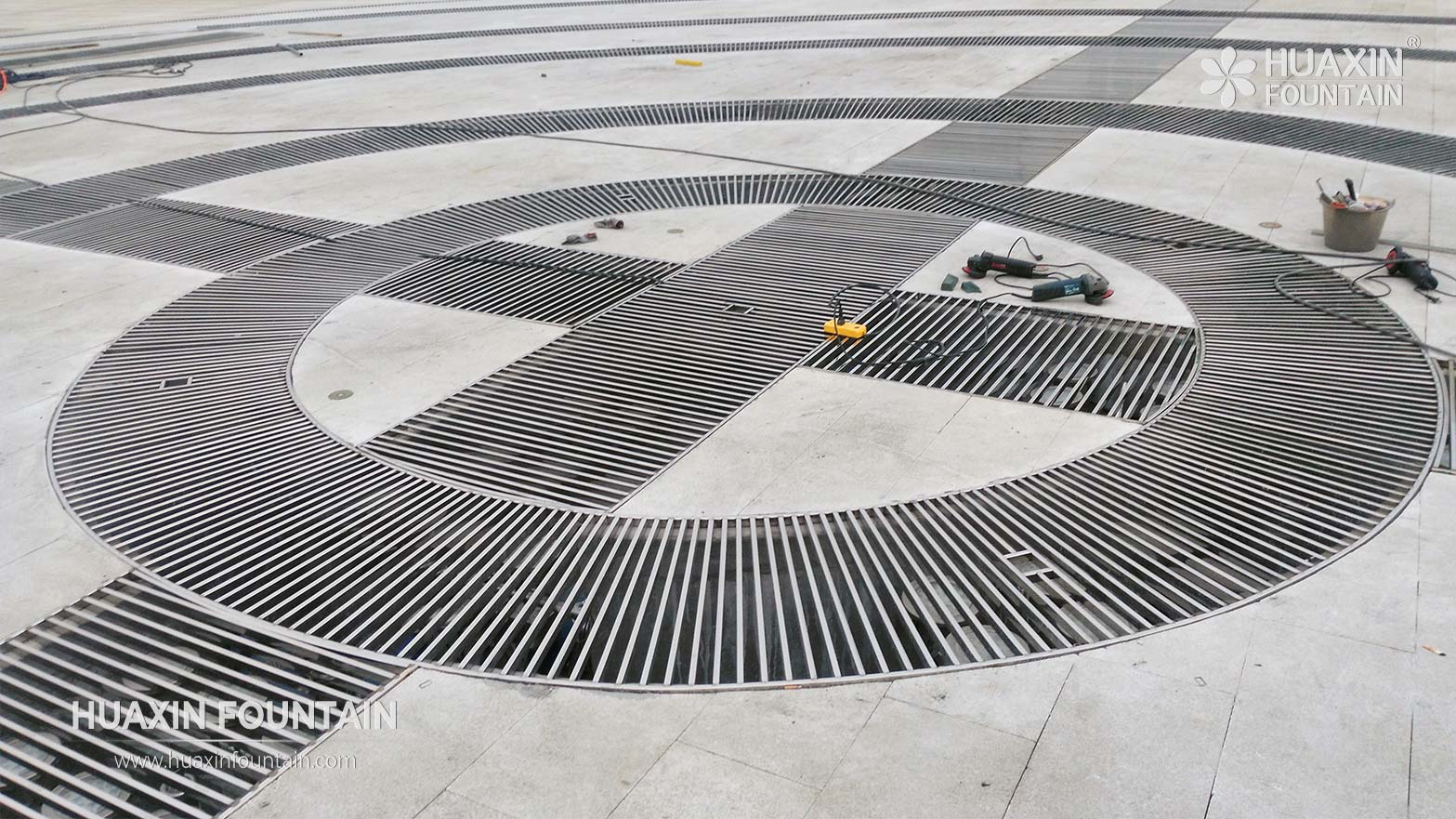
Water must return efficiently through drainage openings, gratings, or collection channels so that surface water can be recovered without excessive pooling on the deck.
The collected water is typically stored in an underground reservoir or circulation system before being pumped back to the fountain jets.
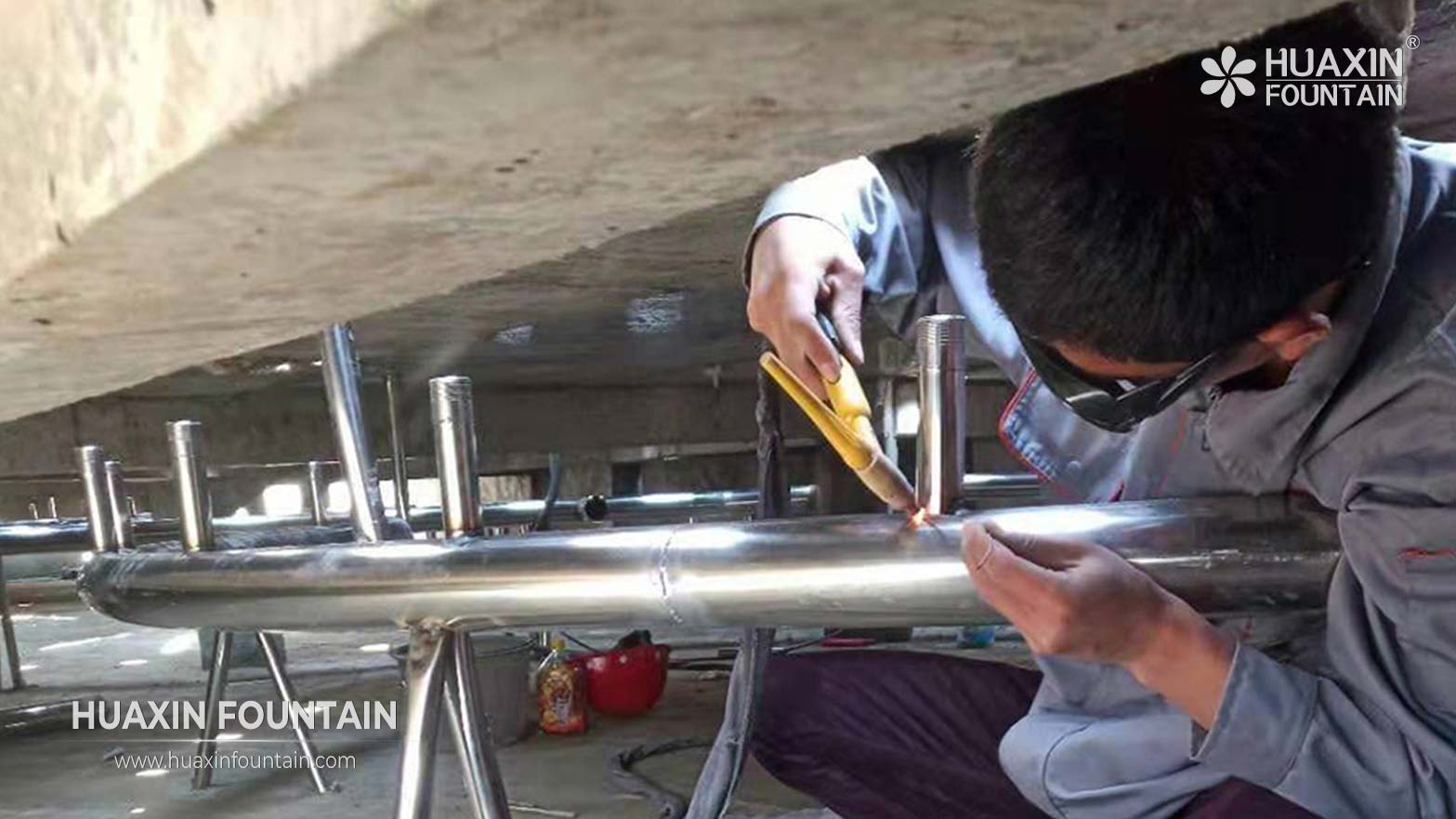
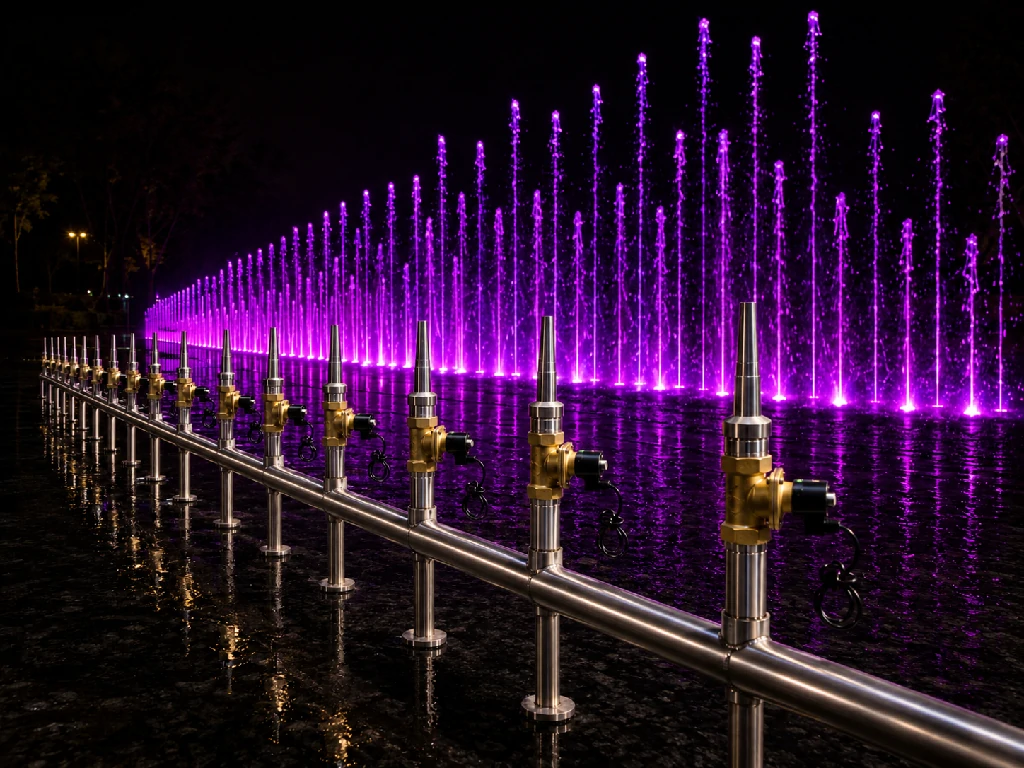
Pumps, pipes, valves, and hydraulic calculations determine jet height, flow stability, pressure, and response during programmed operation.
DMX lighting, PLC controls, valves, pumps, and programming can be coordinated to create timed or music-synchronized fountain sequences.
For fountains where visitors may come into close contact with water, filtration and water treatment should be considered according to project requirements, local regulations, and intended use.
| Type | Main Characteristic | Typical Use |
| Dry Deck Fountain | No exposed pool, ground-level jets, walkable surface | Plazas, malls, parks, commercial and public spaces |
| Interactive Fountain | Designed for direct visitor interaction or responsive operation | Public spaces, parks, family areas |
| Splash Pad | Primarily designed for recreational water play | Children’s play areas and aquatic recreation |
| Musical Dry Deck Fountain | Dry deck structure with music-synchronized programming | Commercial plazas, landmarks and entertainment destinations |
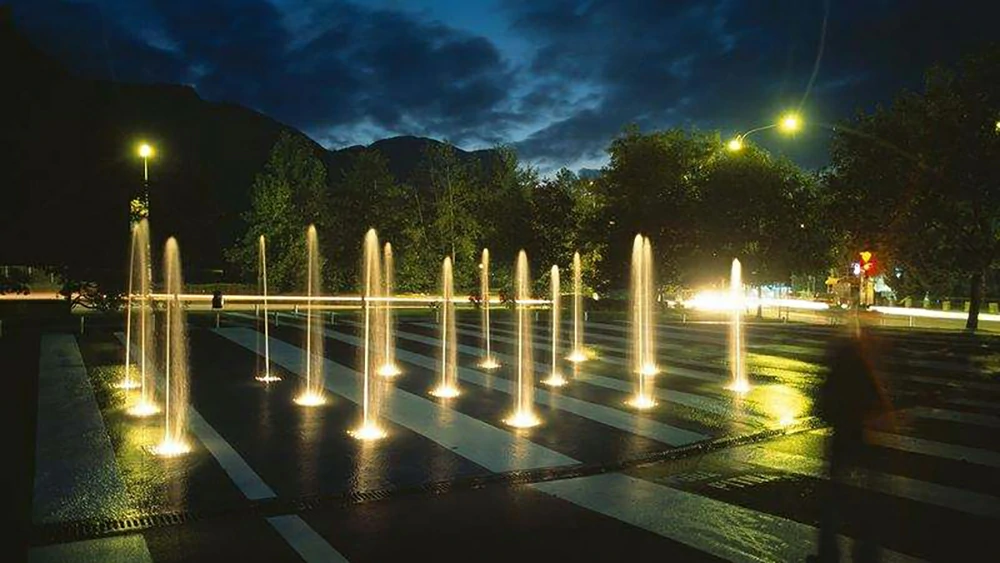
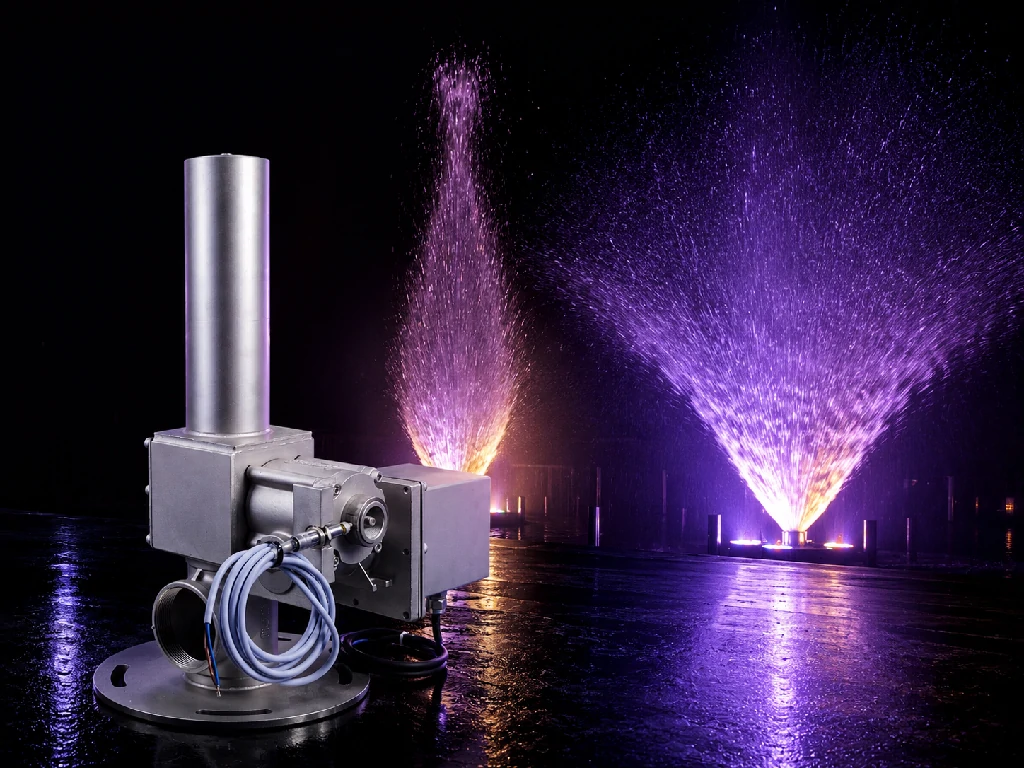
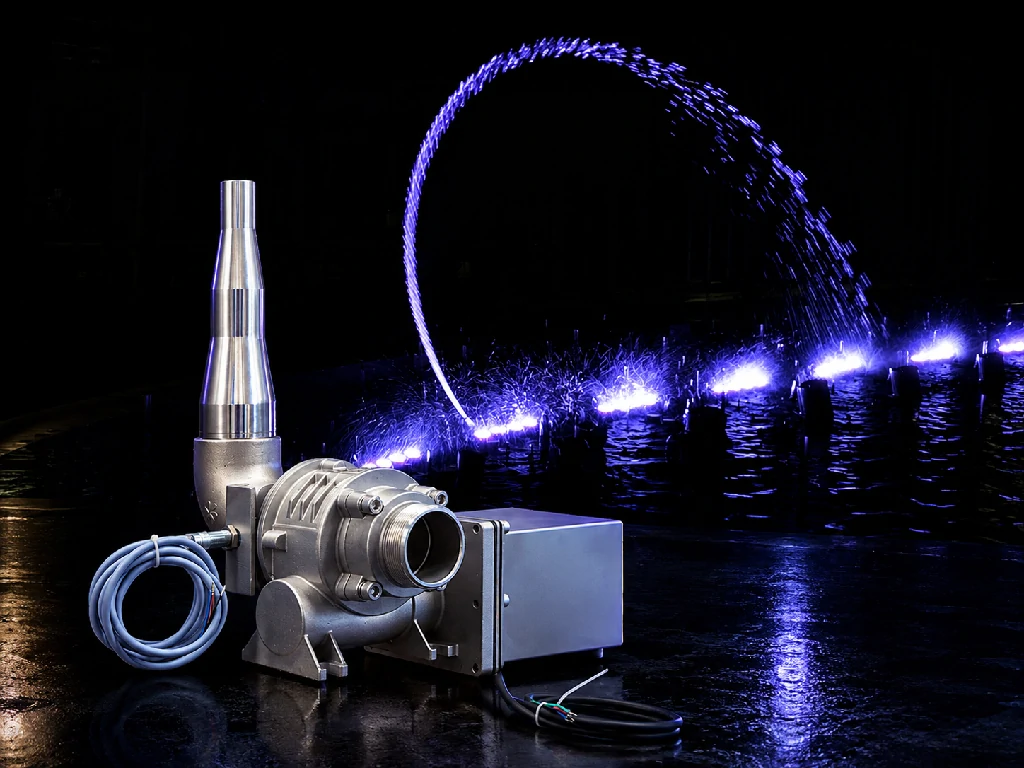
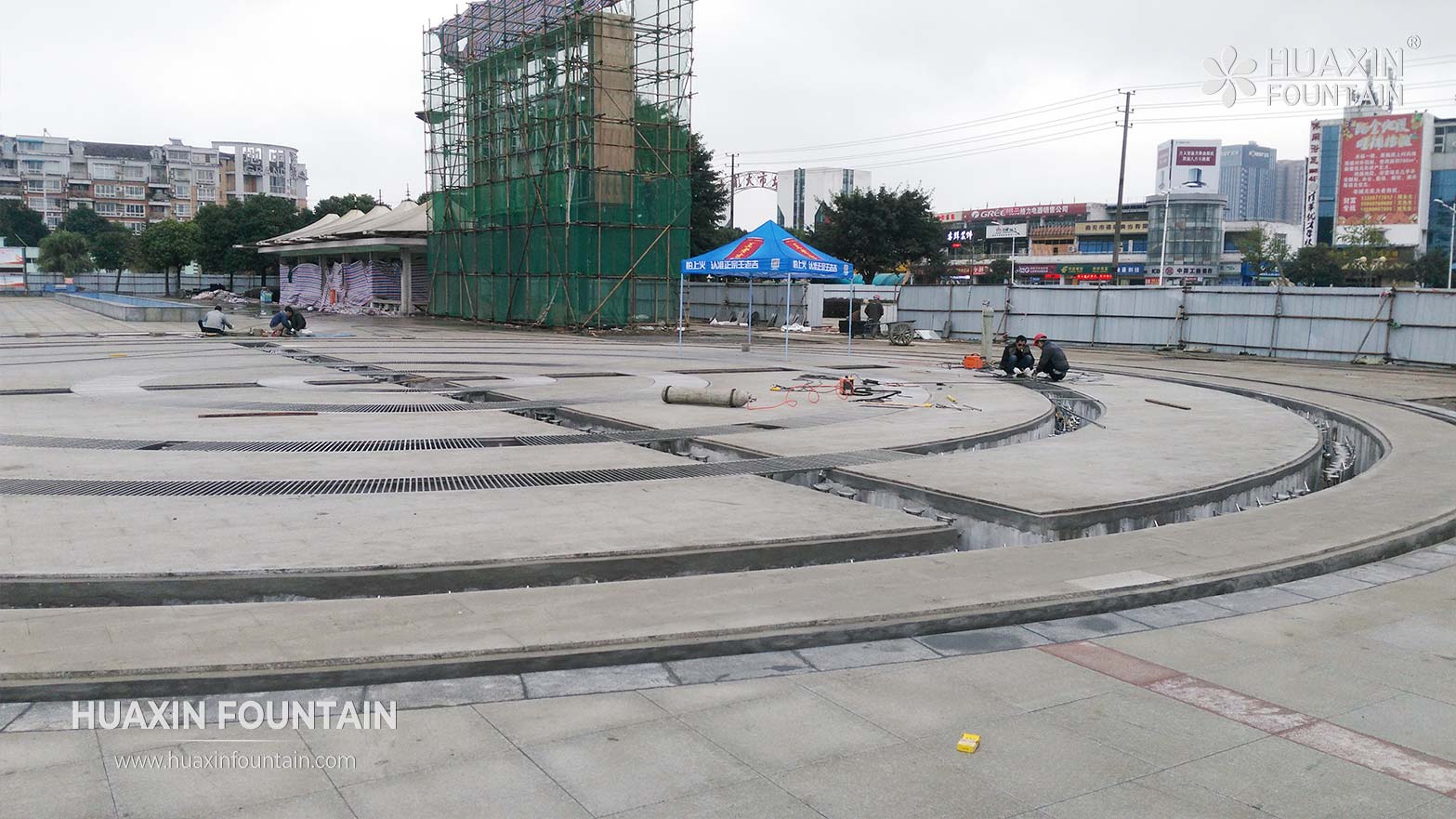
The deck must collect and return water efficiently during normal operation and under changing wind or jet conditions. Drainage layout should be coordinated with the fountain flow rate and deck geometry.
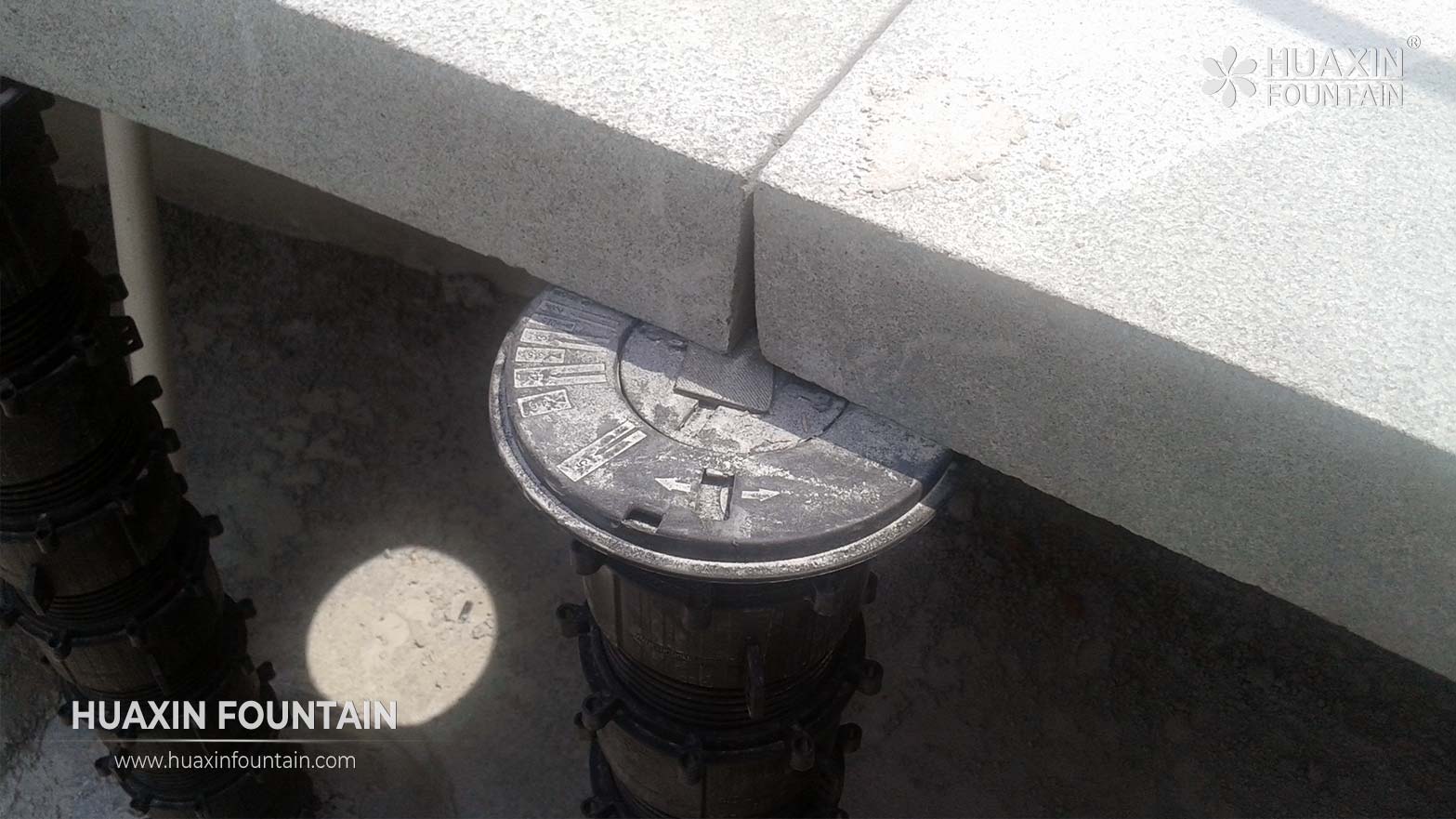
The finished surface should be selected with pedestrian use and wet conditions in mind. Material choice, joint layout, drainage slope, and local safety requirements should be considered together.
Pumps, valves, lights, nozzles, cables, and other components require practical access for inspection and maintenance. A visually clean deck should not come at the cost of difficult servicing.
Interactive or high-contact dry deck fountains may require stronger filtration and water treatment strategies than purely decorative systems. Requirements should be confirmed according to intended use and local regulations.
Lighting, pumps, valves, sensors, control cabinets, and programming should be coordinated during design rather than added after civil work is completed.
If people are expected to enter the fountain area, jet height, spacing, movement range, surface conditions, and operational modes should be designed around the intended visitor experience.
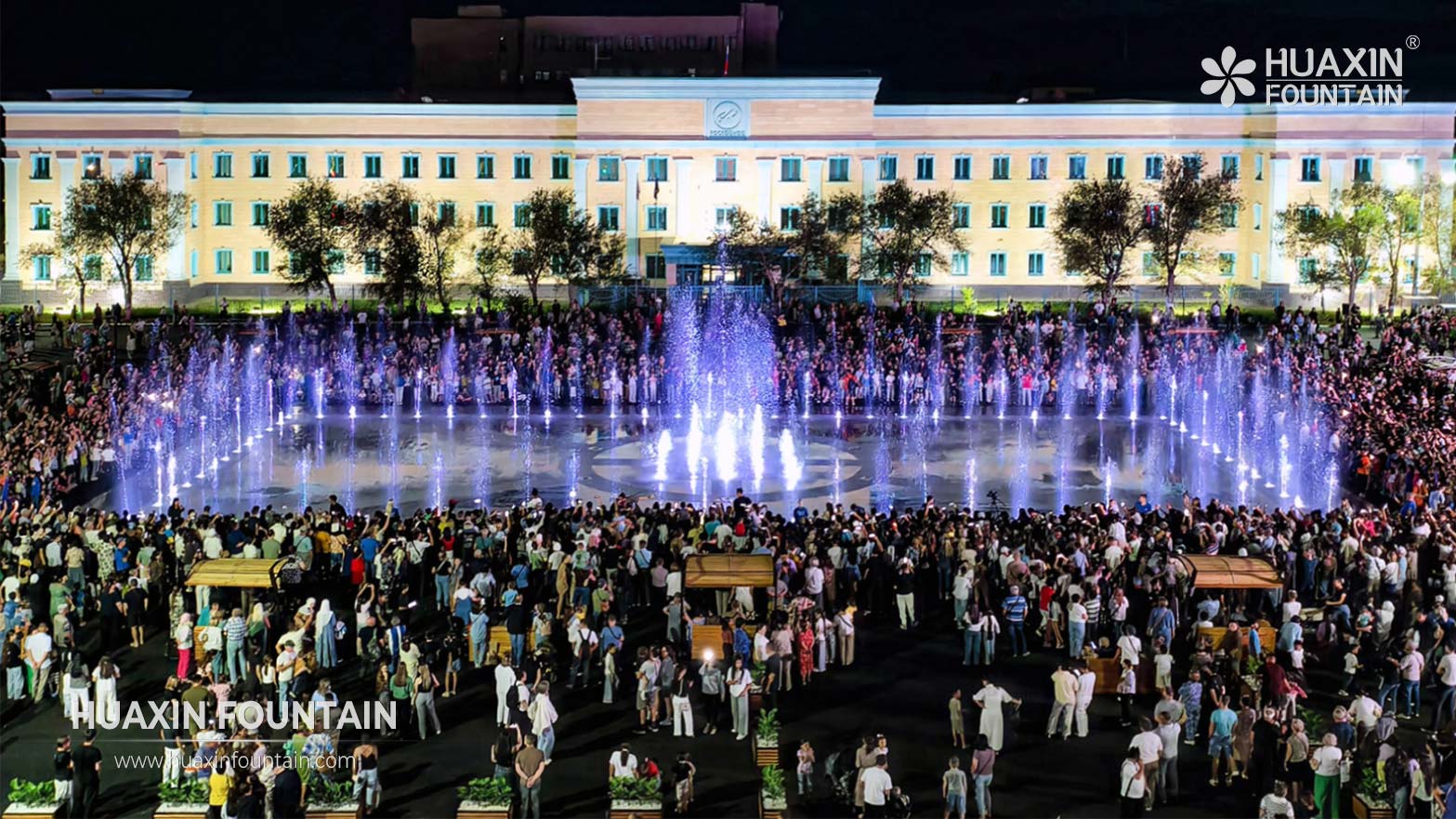
Lenin Square, Baikonur, Kazakhstan
Project Type: Large public plaza dry deck fountain
Application: Municipal public square
Fountain Size: Approx. 40 × 20 m
Highlight: A large ground-level fountain designed for a major public plaza, combining programmed water effects and lighting while preserving an open pedestrian surface.

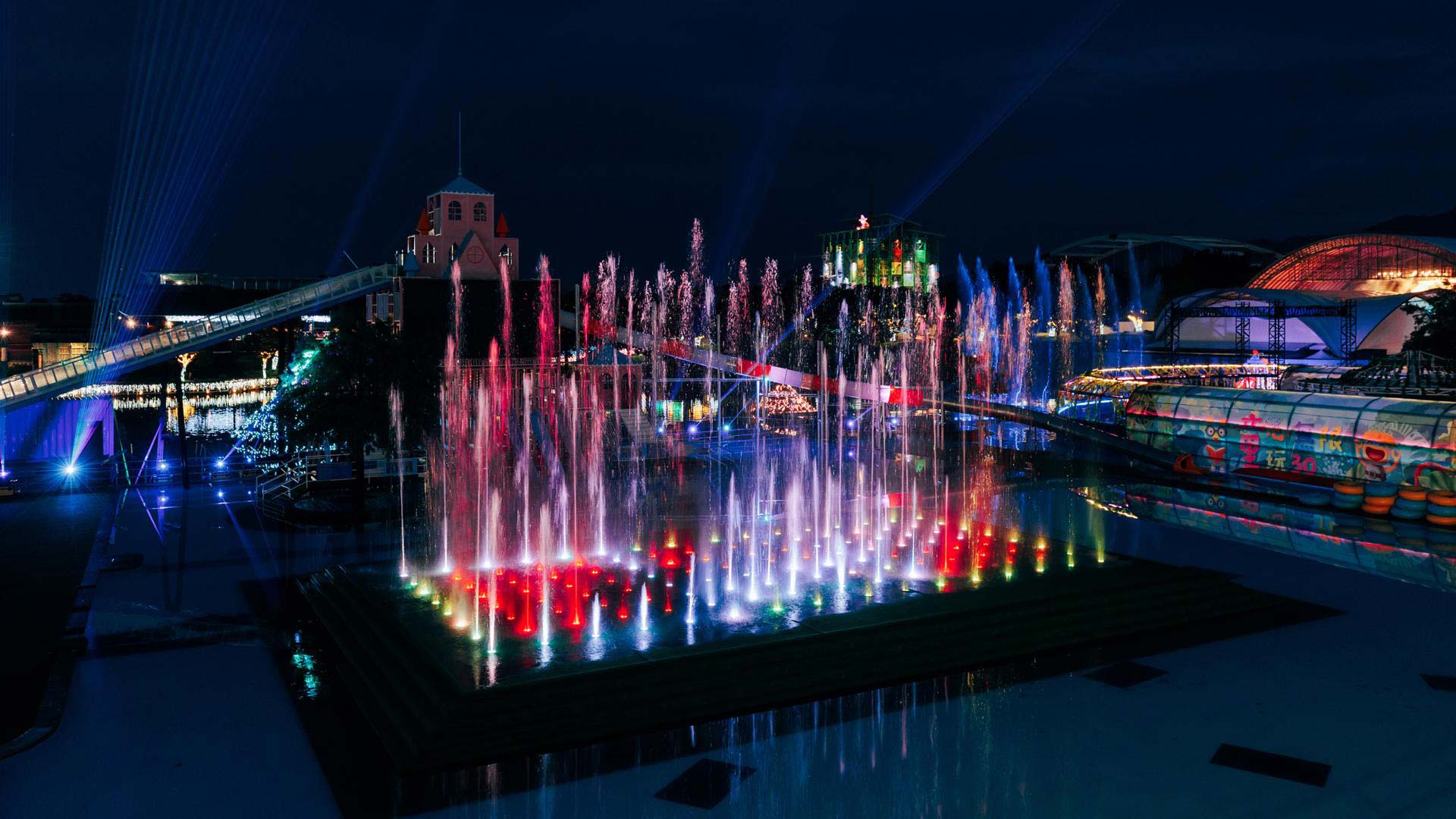
International Children’s Folklore & Folkgame Festival, Taiwan
Project Type: Festival water show with musical fountain elements
Show Focus: Event-based public performance with music, lighting, and fountain effects
System Scope: Fountain show system and event-oriented performance support
Highlight: Water show presentation created for a festival and tourism event environment.
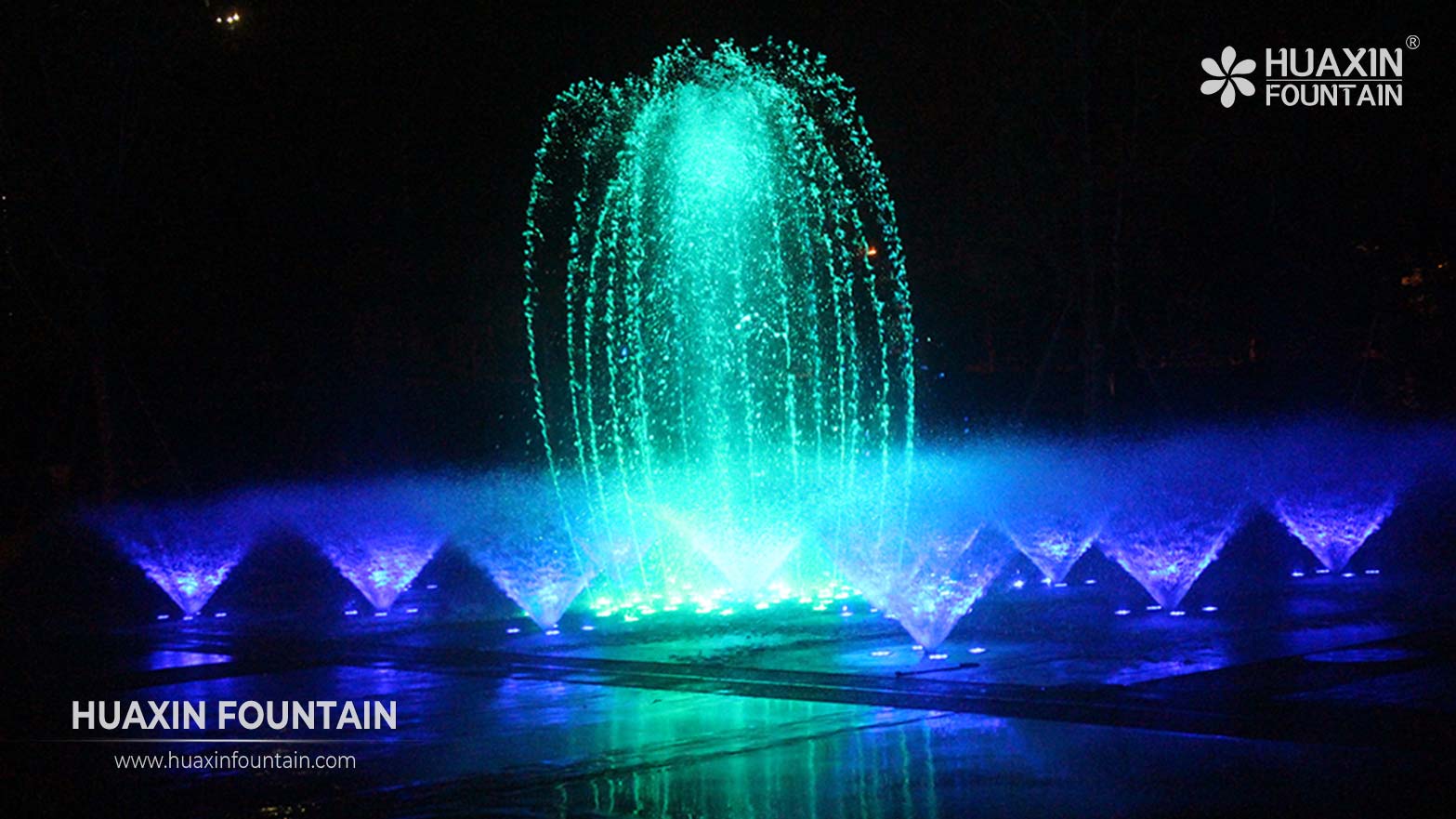
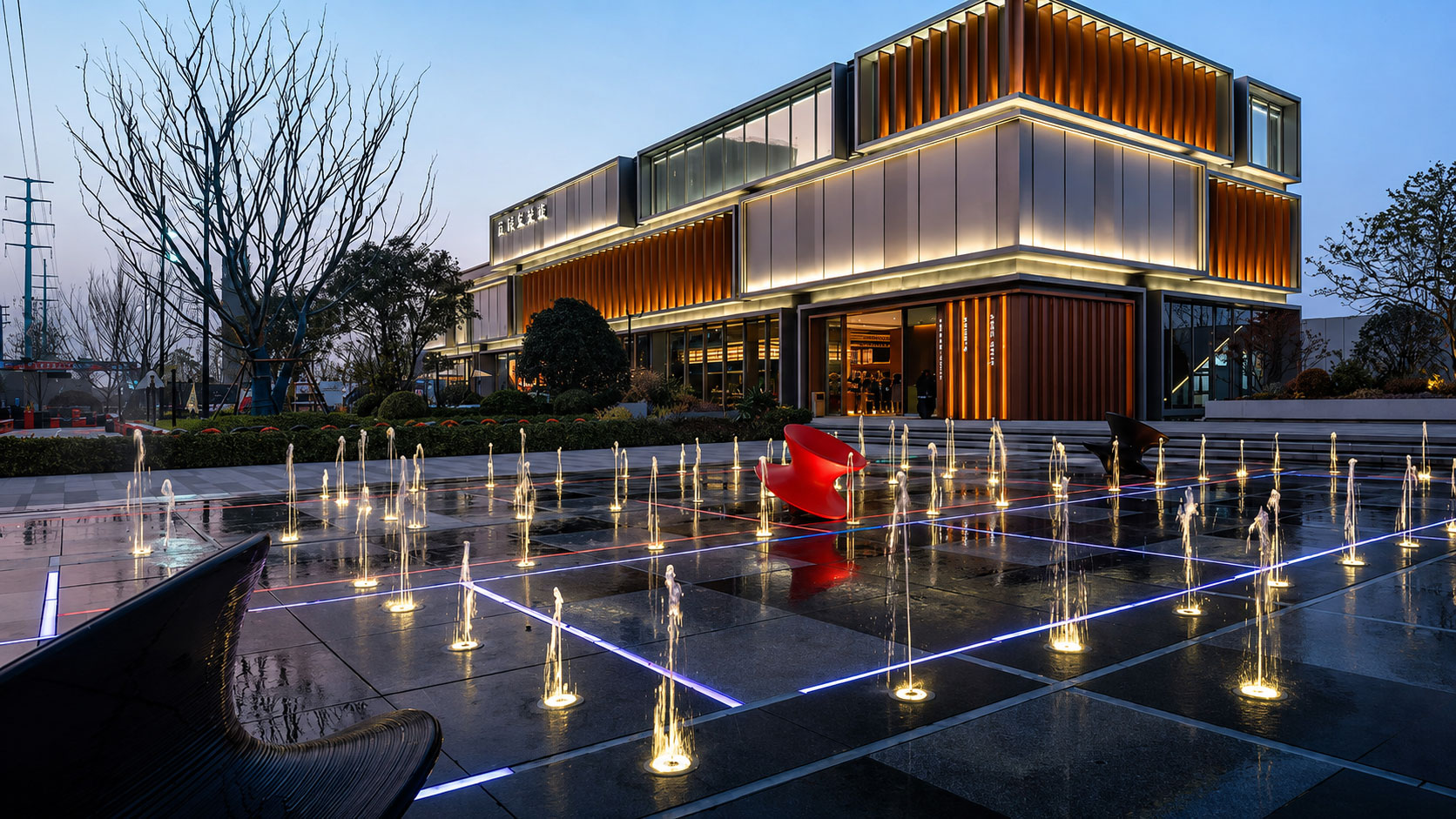
Chengdu Hechuang Plaza, China
Project Type: Commercial dry deck fountain
Application: Commercial plaza
Scope: Design, core equipment, programming, installation, and commissioning support
Highlight: Ground-level fountain system integrated into a commercial public space with programmable water effects and pedestrian-friendly surface design.
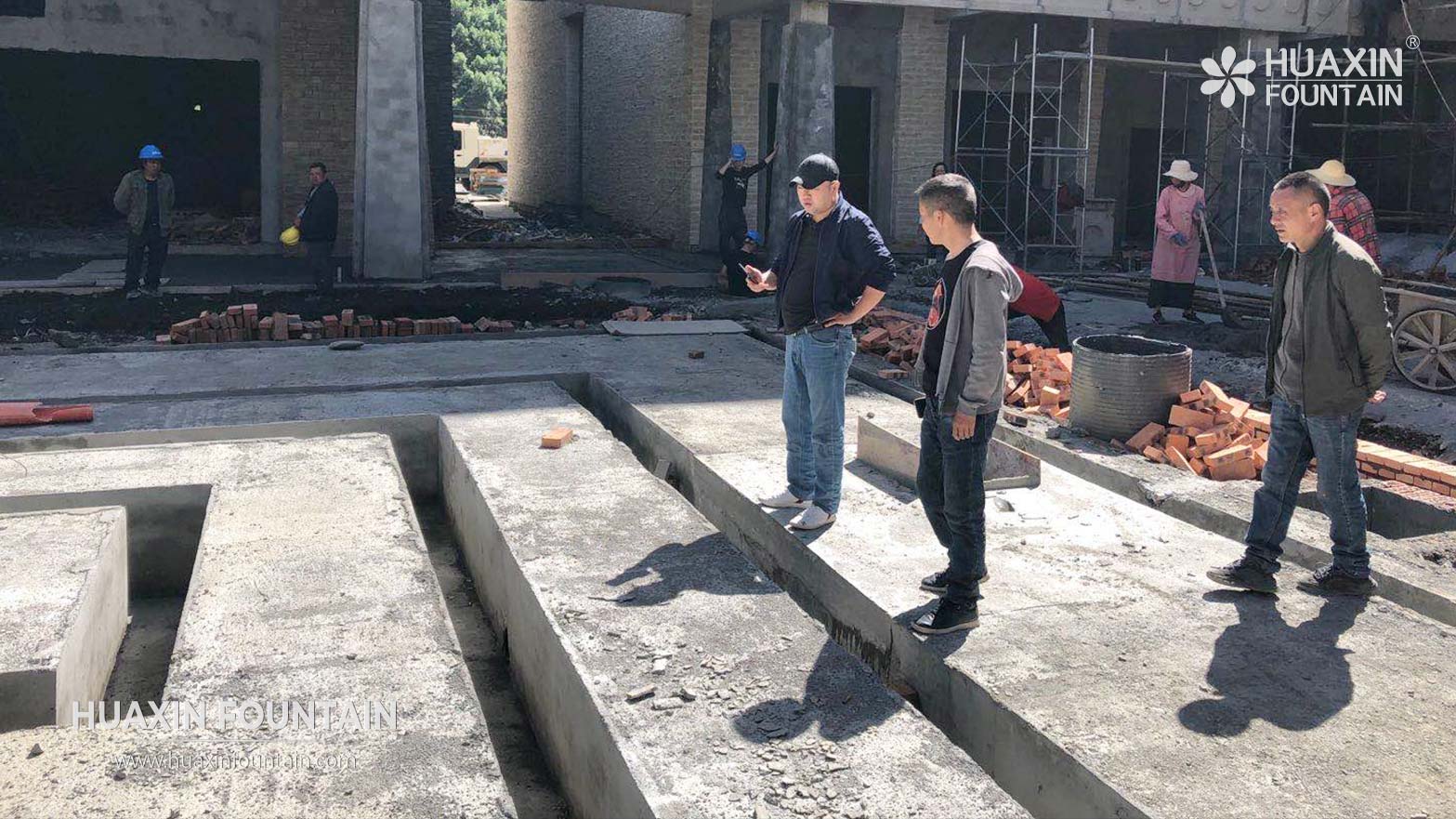
01 Site and Project Review
We review site drawings, dimensions, paving conditions, project function, visitor interaction requirements, target effects, and budget direction.

02 Layout and System Design
Our team develops fountain layout, hydraulic calculations, drainage requirements, equipment positions, control logic, and installation details.

03 Equipment Manufacturing and Testing
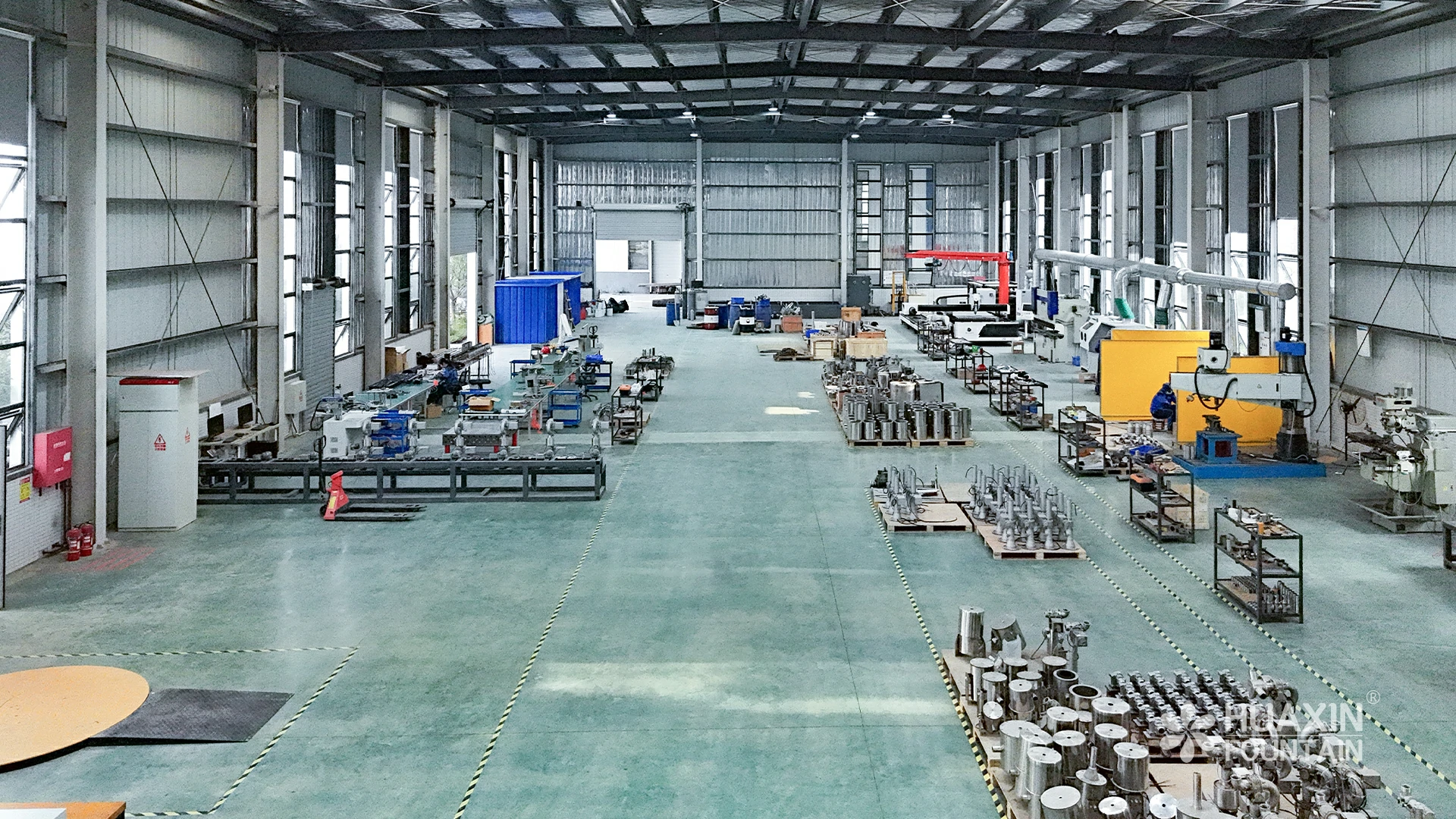
Core equipment, lighting, control cabinets, nozzles, and related system components are manufactured and tested before shipment.

04 Programming and Commissioning
Water sequences, lighting, and optional music programming are tested and adjusted before final operation.
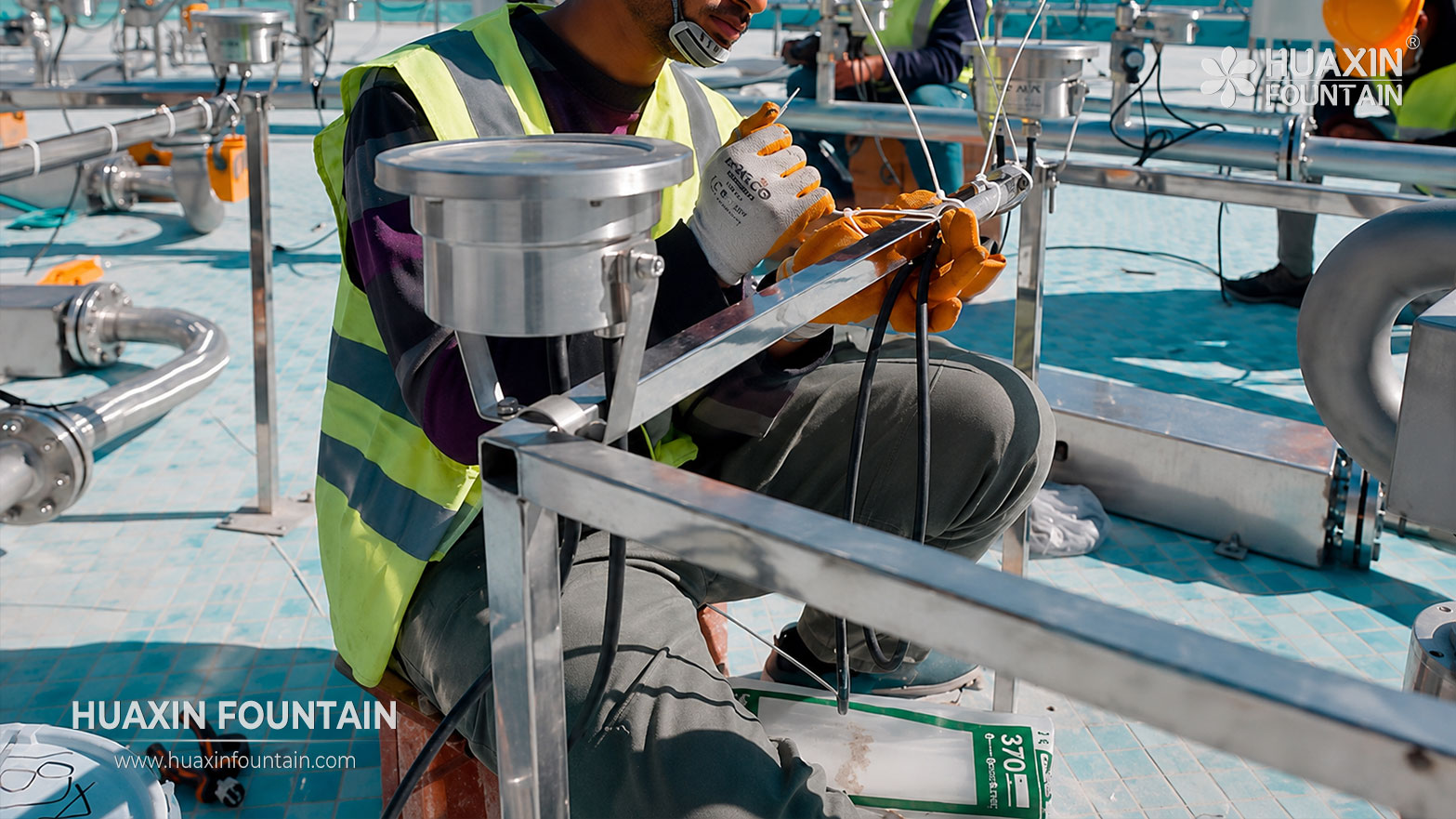
05 Installation Coordination
We provide drawings and technical guidance to help coordinate the fountain system with civil works, paving, drainage, electrical work, and local installation teams.